Why All-Inclusive Wedding Venues Save Time & Money
By Team Wedica | June 23, 2026
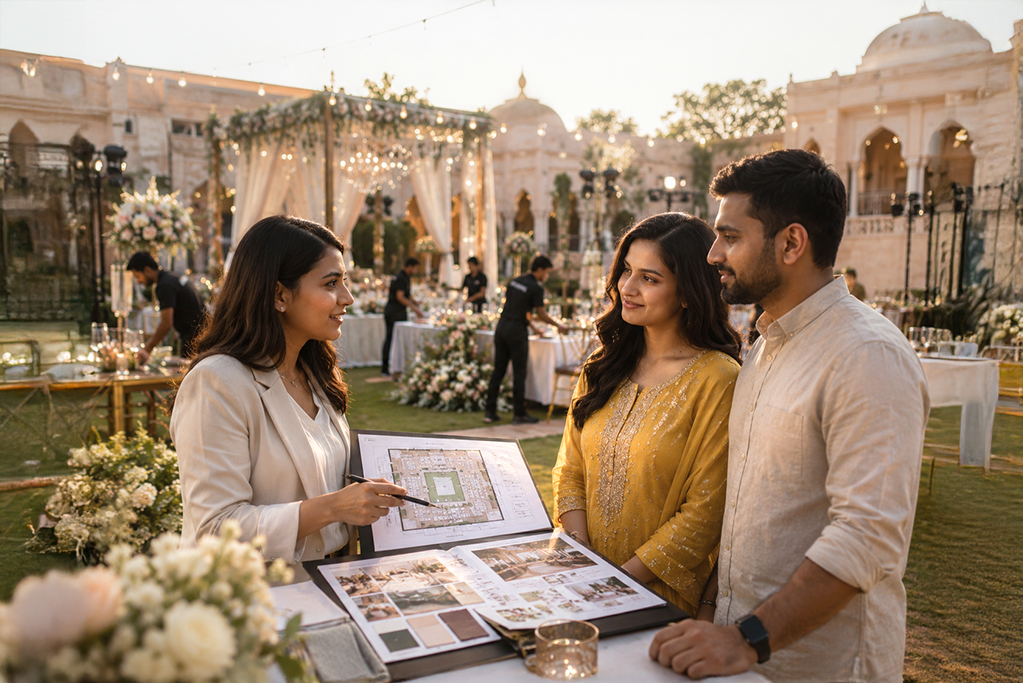
Most couples start wedding planning with a spreadsheet, a Pinterest board, and a list of vendors to call. By month two, that list multiplies to a caterer here, a florist there, a separate rental company, a lighting team, maybe a day-of coordinator to tie it all together. Each one comes with its own contract, its own timeline, and its own way of doing things.
This is where an all-inclusive wedding venue replaces that entire process with one team, one contract, and one point of contact. And the savings, both in money and mental peace, go deeper than most couples expect.
The Hidden Costs of Going À La Carte
Booking vendors separately rarely costs what the initial quotes suggest. A caterer’s quote might not include delivery, setup, or breakdown, and each is billed separately once the contract is signed. A rental company charges its own delivery fee on top of the furniture cost, then another fee if pickup happens outside a narrow window. Add overtime charges if setup runs long, service fees stacked on top of nearly every invoice, and individual deposits required by each vendor months in advance, and the savings of piecing things together start to disappear fast.
Worse, without a single contract holding everything together, scope creep becomes the default. One more centerpiece here, an upgraded linen there, a last-minute lighting addition because the florist mentioned it would really make the space pop, and suddenly the budget has crept well past the original plan, often without anyone noticing until the final invoices arrive. What looks like flexibility on paper often turns into a higher final bill, paid out in a dozen smaller installments instead of one predictable number. This is why couples need to look for all inclusive cost-saving wedding packages that don’t ask them to compromise.
How Bundling Actually Saves Money
All-inclusive wedding venues build their packages on existing relationships with caterers, florists, and rental companies. These relationships are built over dozens of weddings, with negotiated rates that get passed along to couples rather than marked up. Because the venue is the one negotiating, not the couple, those savings reflect real buying power rather than a one-time discount.
That single contract also caps costs upfront. Instead of six separate agreements with six different cancellation policies, payment schedules, and fine print, there’s one document that spells out exactly what’s covered and what isn’t. This protects against the slow budget creep that comes from juggling multiple vendor relationships, where each small add-on feels manageable in isolation but compounds across the full vendor list. The result isn’t just convenience. It’s a more predictable, often genuinely lower, total cost from the very first conversation.
The Time You Don’t Realize You’re Spending
Coordinating ten-plus vendors means ten-plus timelines to track, ten-plus communication styles to learn, and a constant low hum of logistical risk that most couples don’t anticipate. Will the florist’s setup window conflict with the rental delivery? Can the caterer’s truck actually get a generator hookup at this specific location? Did the lighting team get the correct load-in time, or are they working off an email from three months ago that never got updated?
None of this shows up as a line item on a budget spreadsheet, but it shows up as stress. The kind of stress that builds slowly over months of planning and peaks in the final week before the wedding, when there’s no longer time to fix a miscommunication. All-inclusive wedding planning removes most of that mental load before it starts, simply because there’s no longer a web of separate relationships that all need to stay in sync.
One Team That Already Knows How to Work Together
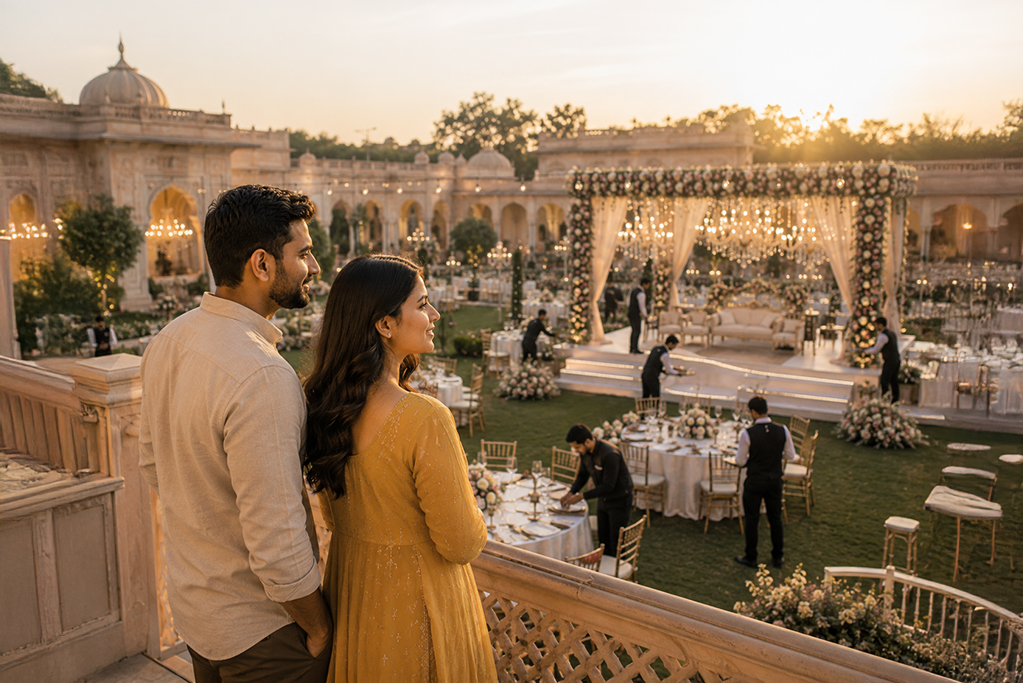
The biggest advantage isn’t just fewer vendors. It’s a team that has already done this, in this exact space, many times over. They know how long setup actually takes in this specific room, where the natural light falls in the late afternoon, which corner photographs best during golden
hour, and how to keep a timeline running smoothly without a couple having to manage it themselves in real time.
One point of contact also means questions get answered faster. There’s no chasing down which vendor is responsible for a specific detail, no waiting on three separate email threads to find out if a change is possible. Nothing falls into the gap between vendors, because there is no gap. Just one team that has already worked out the kinks of operating in that space together.
Less Decision Fatigue, More Wedding Planning Joy
An open-ended search across hundreds of vendors sounds like freedom, but for most couples it becomes overwhelming fast. Every choice of caterer, florist, rental style, and lighting design multiplies into dozens of sub-choices, and decision fatigue sets in long before the wedding itself arrives.
Curated menus and decor packages narrow the choices to a manageable few, which speeds up decisions without sacrificing personality. Rather than comparing a hundred caterers, couples choose between a handful of menus already known to work well in that space. Rather than building a decor plan from scratch, they start from a few proven packages and personalize from there. Couples get to spend their planning time enjoying the process with tasting menus, picking florals, imagining the day, instead of drowning in comparison spreadsheets and vendor calls.
In the end, all-inclusive planning gives couples back what matters most. The time and energy for the marriage itself, not the logistics behind it. If that sounds like the kind of planning experience you want, Wedica Celebrations love to show you around and walk you through exactly what’s included.
FAQ’s
1. Is an all-inclusive venue more expensive than booking separately?
Usually not, once hidden costs are factored in. Separate bookings often come with delivery fees, multiple deposits, and overtime charges that aren’t obvious upfront. All-inclusive packages typically bundle these into one predictable, often lower, total price.
2. What’s typically included in an all-inclusive wedding package?
Most packages cover the venue, catering, furniture and decor, and day-of coordination. Some also include lighting, florals, and a dedicated point of contact, so couples aren’t managing multiple vendor relationships on their own.
3. Can I still customize an all-inclusive wedding?
Yes. Packages typically offer curated menu and decor options rather than one fixed setup, giving couples meaningful choices without the overwhelm of an entirely open-ended search.
4. How much time does an all-inclusive venue actually save?
Beyond fewer vendor calls, it removes the mental load of tracking multiple timelines and contracts. Couples spend less time managing logistics and more time actually enjoying the planning process.
5. What should I ask before signing with an all-inclusive venue?
Ask exactly what’s included, what counts as an upgrade, and how the team handles timeline coordination on the day itself. A clear answer to all three is a good sign the venue runs a tight, experienced operation.
Popular Posts

The One Stop Destination Wedding Venue in Hyderabad
Team Wedica
SEP.23, 2024

The Ultimate Destination for Your Sangeet Ceremony in Hyderabad
Team Wedica
SEP.23, 2024

The Perfect Destination for Your Mehendi Ceremony in Hyderabad
Team Wedica
SEP.23, 2024

The Ultimate Destination for Your Sangeet Ceremony in Hyderabad
Team Wedica
SEP.23, 2024
