What is Talambralu in Telugu Wedding?
By Team Wedica | September 21, 2026
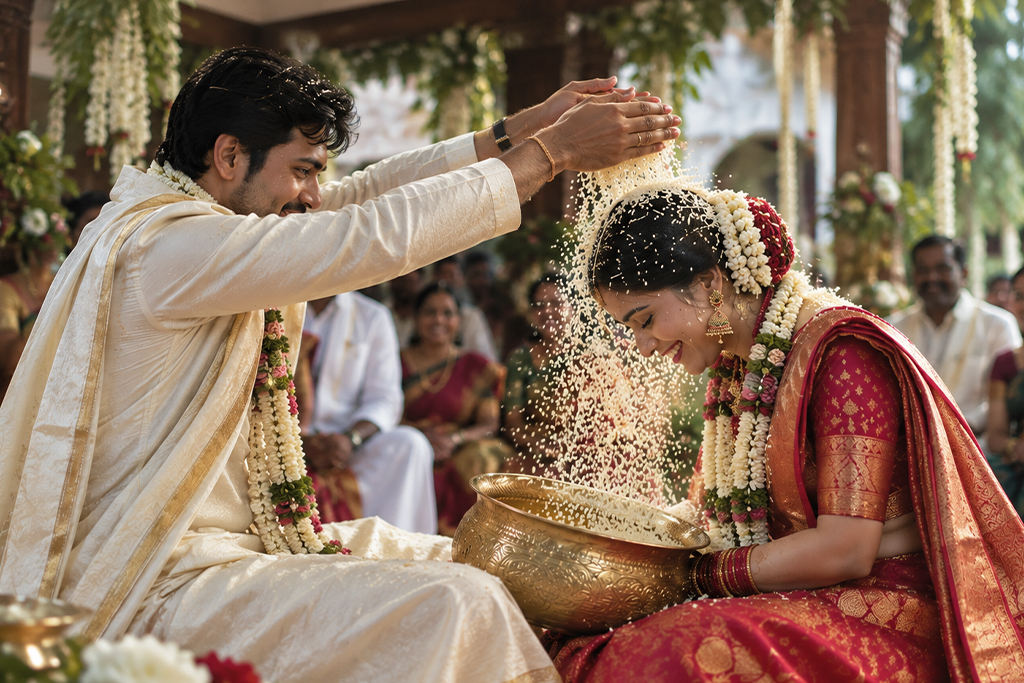
Talambralu (తలంబ్రాలు) is a traditional marriage ritual performed in Telugu states. The word “Talambralu” refers to both the ritual and the rice used in it. The word is linked to tala, meaning head, and pralu, referring to rice or consecrated rice.
Talambralu is held after the groom ties the mangalsutra to the bride. The wedding hall goes from the silence while the pooja is being performed and mantras are being recited, to claps and akshintalu during the tying of the mangalsutra, and then to laughter as the bride and groom begin Talambralu.
Read on to learn how Talambralu is performed, whether it is only part of a wedding, and how the ritual is celebrated in modern Telugu weddings.
Talambralu: The Couple Competing with Love?
Talambralu is a Telugu marriage ritual where the couple pours rice grains mixed with turmeric over each other’s heads. The swamy or pandit asks either the bride or groom to pour the rice over the other first, and then the other one does the same.
Initially, the couple simply follows the instructions of the swamy or pandit. As the ritual continues, it often turns into a fun competition to see who can pour more Talambralu over the other.
Talambralu Is Prepared With?
Traditionally, Talambralu was prepared by mixing rice grains and turmeric. With customs being different across places and communities, modern Telugu weddings may also include flowers, pearls, or other traditional elements with the rice and turmeric.
These variations are also sometimes given special names, such as Mutyala Talambralu and Navaratna Talambralu.
Talambralu: More Than a Playful Moment
Talambralu has a meaning beyond a playful moment between the couple. The unbroken rice is seen as a symbol of wholeness, abundance and continuity. Turmeric, also called Pasupu in Telugu, is associated with auspiciousness, purity and well-being for the newly married couple.
So, pouring Talambralu over each other is a way of wishing each other a life filled with happiness, prosperity, abundance and togetherness. The playful exchange also brings laughter to the wedding and gives the couple a chance to celebrate the beginning of their life together with joy.
What is Mutyala Talambralu
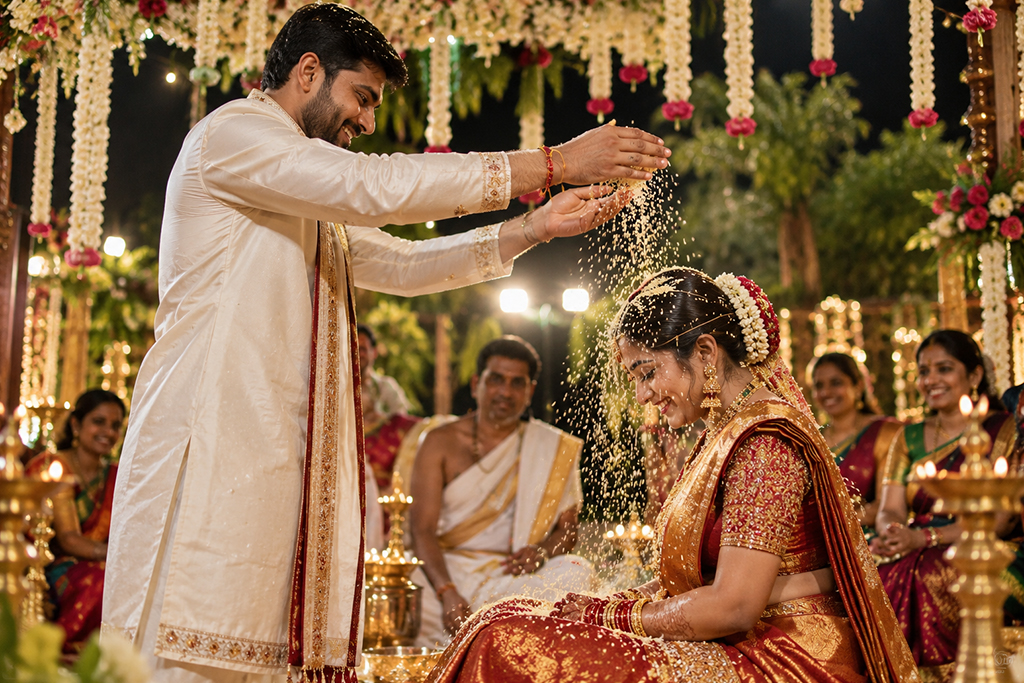
Mutyala means pearls in Telugu. Mutyala Talambralu means pearls being included with the Talambralu. Mutyala Talambralu is particularly associated with Sita-Rama Kalyanam, i.e., celebrations of Goddess Sita and Lord Rama’s wedding.
Some Telugu marriages may also add pearls to the traditional rice and turmeric Talambralu preparation.
What is Navaratna Talambralu
Navaratna means nine gems. In Navaratna Talambralu, nine gems or gem-like elements are included with the traditional rice grain and turmeric Talambralu. The nine elements are traditionally associated with the nine grahas.
However, this does not always mean that nine real gems are mixed into the Talambralu. The preparation can vary based on the customs followed by the family. It may include rice grains in nine different colours, flower petals of nine different flowers or colours, beads of different types and colours, etc.
Talambralu in Modern Telugu Weddings
The traditional way of performing Talambralu is still the same. Modern weddings have mostly added to the old tradition rather than changing it. During the preparation, families may add things such as flower petals, pearls and other traditional elements along with the rice and turmeric.
During the playful part, the exchange may take a dramatic turn as the bride and groom turn it into a fun competition to see who can pour more Talambralu over the other. It also gives photographers a chance to capture the couple with faces full of natural laughter on their very special day.
Final Thoughts
The tradition of Talambralu remains the same, showing how an old wedding custom has been carried forward while also finding its place in the present. With different places, families, and communities, the name, when it is performed, and how it is performed may change. But the heart of the ritual remains the same: a traditional blessing for the couple, celebrated with love, laughter, and a little playful competition.
FAQ’s
1. What is Talambralu in a Telugu wedding?
Talambralu is a traditional Telugu wedding ritual where the bride and groom pour rice grains mixed with turmeric over each other’s heads.
2. When is Talambralu performed in a Telugu wedding?
Talambralu is generally performed after the groom ties the mangalsutra to the bride. The exact sequence can vary depending on the wedding customs followed by the family.
3. What is used to prepare Talambralu?
Talambralu is traditionally prepared with rice grains and turmeric. Depending on family and community customs, flowers, pearls, beads or other traditional elements may also be included.
4. Is Talambralu performed at home or at the wedding venue?
It depends on where the tying of the mangalsutra takes place. Since Talambralu generally follows the mangalsutra ceremony, it is usually performed at the same place.
5. Who prepares Talambralu, the bride’s side or the groom’s side?
It can depend on the customs followed by the families and which side is hosting the wedding. Sometimes, both families may bring their own Talambralu and mix them together before the ritual.
Popular Posts

The One Stop Destination Wedding Venue in Hyderabad
Team Wedica
SEP.23, 2024

The Ultimate Destination for Your Sangeet Ceremony in Hyderabad
Team Wedica
SEP.23, 2024

The Perfect Destination for Your Mehendi Ceremony in Hyderabad
Team Wedica
SEP.23, 2024

The Ultimate Destination for Your Sangeet Ceremony in Hyderabad
Team Wedica
SEP.23, 2024
