Blogs Details

Akshintalu in Telugu Weddings: Why Is It Performed at Home and at the Wedding Hall?
By Team Wedica | September 16, 2026
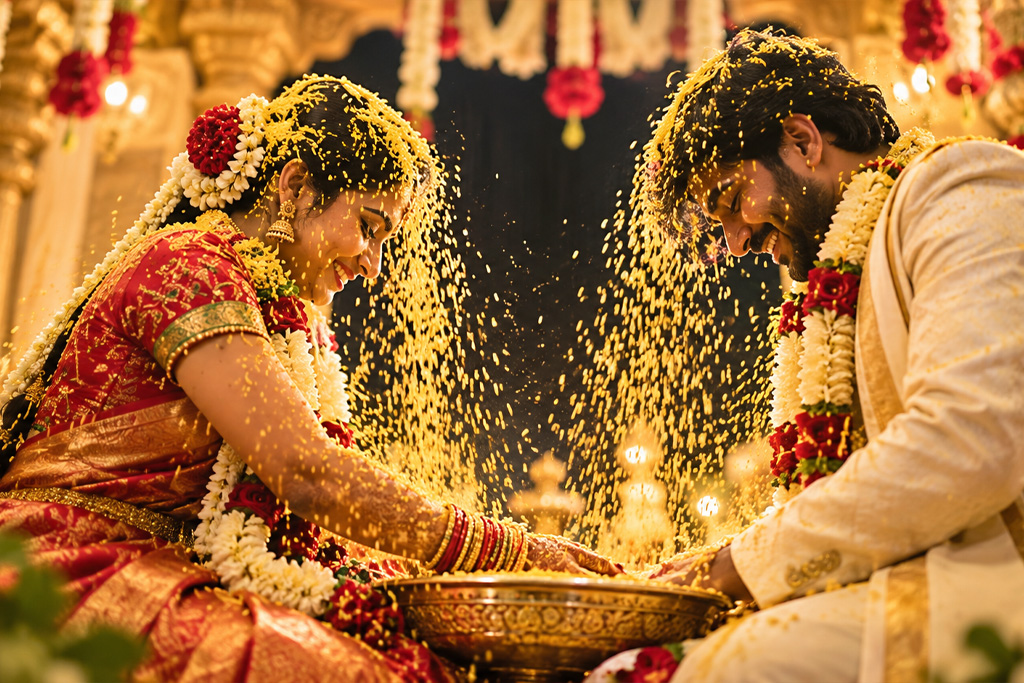
Wedding rituals and traditions have been evolving over time. While some customs are relatively new, others have been followed for generations and continue to be practiced. Akshintalu is one such wedding ritual that has been carried out for generations and continues to be an important part of Telugu weddings. Akshintalu can be seen being performed at the couple’s home, at the marriage hall, and even at temples.
So, are all these occasions referred to as Akshintalu? And what is the significance of performing them at different stages? Read on to know more about akshintalu and its significance in Telugu weddings.
What is Akshintalu in a Telugu Wedding?
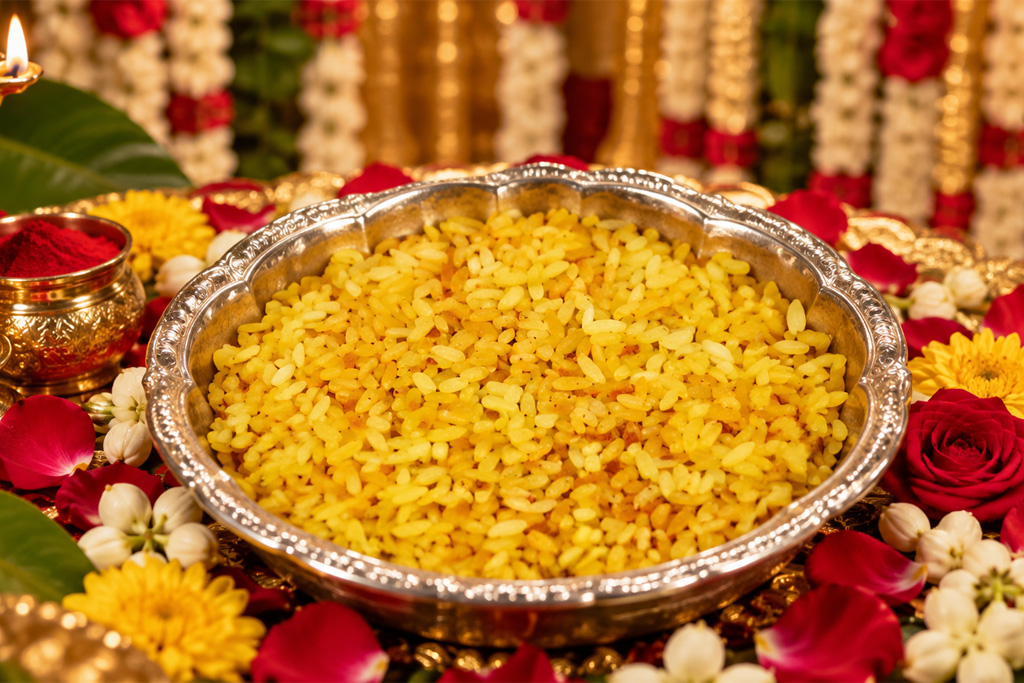
Akshintalu is a telugu wedding ritual in which the bride and groom are showered with rice grains mixed with turmeric, and in some traditions, ghee is also added to the preparation. The ritual is a way of offering blessings to the couple, with the rice grains carrying auspicious significance.
Interestingly, the term akshintalu is used for both the ritual and the auspicious rice grains prepared for it. The rice grains themselves are also referred to as akshatalu.
The akshintalu that people generally refer to in a Telugu wedding are associated with the muhurtham. At this auspicious time, after the groom ties the mangalsutra around the bride’s neck, the couple is showered with akshintalu by the people present, who offer their blessings through the ritual. This is why, on a wedding invitation, you may see the muhurtham time mentioned, sometimes alongside or in reference to the akshintalu.
Why Are Rice Grains Used in Akshintalu?
Rice has long been considered an auspicious grain and is associated with abundance, prosperity, nourishment, and fertility. The rice grains used for Akshintalu are traditionally whole and unbroken. The idea of using unbroken grains is associated with completeness, continuity, and an unbroken bond, reflecting the wish for the couple to have a harmonious and lasting married life.
Why Are Akshintalu Sometimes Performed at Bride’s Home?
The akshintalu that are associated with the wedding muhurtham are usually performed at the prescribed auspicious time. However, that time may sometimes fall at an hour when it is not practical for the couple and all the wedding guests to be at the marriage hall. In such cases, the ritual may be performed at home so that the prescribed timing can be followed. Later, it can also be performed at the wedding hall, allowing the relatives and guests gathered there to bless the couple.
There is also another reason why rice may be showered on the couple at home.
Before the bride and groom, or just the bride depending on the family’s tradition, leave for the wedding venue from her parental home, a puja is performed at home. Leaving her parental home on the wedding day is seen as an important transition. Traditionally, after leaving for the wedding, she does not return to her parental home as her place of residence; instead, after the wedding ceremonies, she proceeds to the groom’s home. While she will, of course, visit and spend time at her parents’ home later, her departure on the wedding day symbolises her transition into her married household.
As part of the puja and farewell, the bride or couple are therefore showered with rice grains by family members and elders as a blessing before they leave. However, this is not necessarily the specific akshintalu ritual associated with the wedding muhurtham, but an act of blessing that carries the sentiment of sending the bride or couple forward with their family’s good wishes and blessings.
Akshintalu at the Marriage Hall
Akshintalu at the marriage hall are held so that relatives and guests from both the bride’s and groom’s sides can participate and bless the couple. When the muhurtham falls at a time that can be observed at the wedding hall, everyone present can take part in the ritual.
However, if the muhurtham falls at an inconvenient time, the akshintalu may be performed earlier at home or at a temple. The akshintalu at the marriage hall can then be performed later, allowing everyone present in the wedding venue to shower the couple with akshintalu and offer their blessings.
Akshintalu at the Groom's House
The wedding rituals do not necessarily end when the couple leaves the marriage hall. When the newly married couple arrives at the groom’s house, akshintalu may once again be part of the welcome. Family members at the groom’s home shower the couple with the auspicious rice and offer their blessings as they enter the household.
Most traditional Telugu weddings, and Hindu weddings in general, fall under the first Act, while couples from different religions or those choosing a court marriage typically use the second.
For the bride, this marks another important transition in the wedding journey. She has left her parental home, completed the wedding ceremony, and is now entering the groom’s household as his wife.
What Is Rice Pouring in Talambralu?
While talambralu also involves turmeric-mixed rice being poured over the couple, it is different from the akshintalu.
Talambralu is a Telugu wedding ritual that is both fun and meaningful. Here, the bride and groom themselves pour rice mixed with turmeric over each other’s heads, as an act of blessing each other. For fun, they may also compete to see who can pour more rice over the other.
How Akshintalu Take Place in 2026?
While the tradition of akshintalu remains the same, the way the rice grains are prepared can vary in modern Telugu weddings. Along with the traditional turmeric-mixed rice, some families may add coloured rice grains, rose petals, or other decorative elements to make the ritual more vibrant and visually appealing.
These additions do not change the essence of the ritual. The akshintalu continue to represent the blessings and good wishes offered to the bride and groom as they begin their married life.
Akshintalu Through the Wedding Journey
| Where | Why it may be performed |
|---|---|
| At the bride's/couple's home | To observe an auspicious muhurtham when the timing is inconvenient for the larger gathering, or as part of the blessings given before the bride or couple leaves for the wedding. |
| At the marriage hall | To allow relatives and guests from both sides to participate and bless the couple. The muhurtham itself may also be observed at the hall if the timing is convenient. |
| At the groom's house | To welcome and bless the newly married couple as they enter the groom's household. |
Final Thoughts
Akshintalu, wherever it is performed for a marriage-related purpose, carries the same sentiment — to bless the couple for their future as husband and wife. The way it is performed and where it is performed can vary based on the traditional beliefs and practices of the family, community, or state.
FAQ’s
1. Are Akshintalu and Talambralu the same?
No. While both involve turmeric-mixed rice, Akshintalu generally refers to the rice shower offered by family members and guests as a blessing, while in Talambralu, the bride and groom pour the rice over each other as part of the wedding ritual.
2. What is the significance of unbroken rice grains in Akshintalu?
Unbroken rice grains are traditionally associated with completeness, continuity and an unbroken bond. They symbolise the wish for a harmonious and lasting married life.
3. Why are turmeric and other ingredients added to Akshintalu?
Turmeric is traditionally considered auspicious and is associated with purity, prosperity and well-being. Depending on the family tradition, ingredients such as ghee, coloured rice or rose petals may also be added.
4. Does Akshintalu have to be performed at the muhurtham?
The Akshintalu event is traditionally performed during the wedding muhurtham, at the prescribed auspicious time.
Popular Posts

The One Stop Destination Wedding Venue in Hyderabad
Team Wedica
SEP.23, 2024

The Ultimate Destination for Your Sangeet Ceremony in Hyderabad
Team Wedica
SEP.23, 2024

The Perfect Destination for Your Mehendi Ceremony in Hyderabad
Team Wedica
SEP.23, 2024

The Ultimate Destination for Your Sangeet Ceremony in Hyderabad
Team Wedica
SEP.23, 2024
