Choosing the Perfect Space for Your Event: Banquet Hall vs Lawn vs Courtyard
Blogs Details

Choosing the Perfect Space for Your Event: Banquet Hall vs Lawn vs Courtyard
By Team Wedica | Jan 9, 2026
Marriage is a big decision in India. It brings together families, traditions, emotions, and days of planning. Challenges often appear when the venue layout does not align with the pace, scale, and flow of different wedding functions.
Crowds building at the wrong time. Elders searching for seating. Guests unsure where the ceremony is happening. Food service clashing with rituals. These issues usually appear late, when the wedding is already in motion, and changes are stressful and expensive.
With weddings now spread across three or four days, each function carries a different mood and purpose. Treating all of them the same often leads to confusion and discomfort.
The venue matters. But more than that, the kind of space you choose for each function quietly decides how smooth, calm, and memorable the wedding feels.
How Venue Spaces Shape Different Wedding Functions?
Most weddings today don’t finish in a few hours. They unfold over three or four days, sometimes even more.
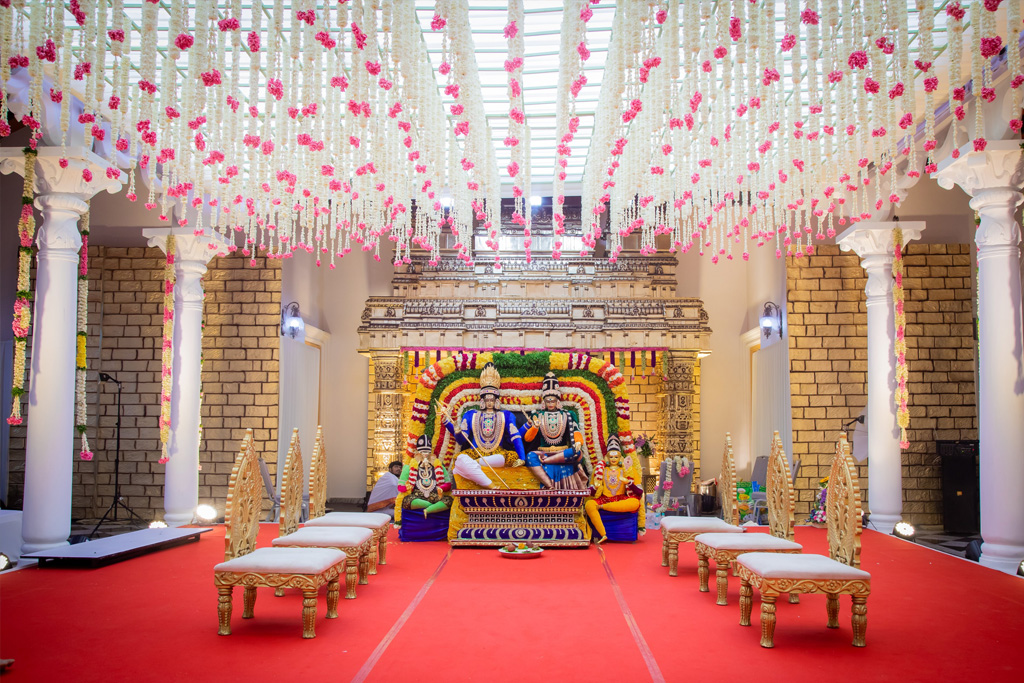
★ There are family-only rituals like muhurtham which needs focus and calm
★ Social gatherings like haldi or mehendi which are more casual and chatty
★ Formal ceremonies include wedding day, reception or engagement demand movement and mass involvement
Each function feels different, and each one brings a different set of guests. Expecting one kind of space to handle all of this in the same way often leads to fatigue—for the couple and for the guests.
What works well is not repeating the same setting again and again. When spaces change with the function, the wedding feels lighter, better paced, and easier to enjoy. The shift in space helps everyone reset, without needing explanations or announcements. Couples today notice this before they choose a wedding venue. They want functions to feel distinct, not like a repeat in a different outfit. This is why understanding venue spaces is less about comparison and more about fit—how well a space completes what the function is meant to be.
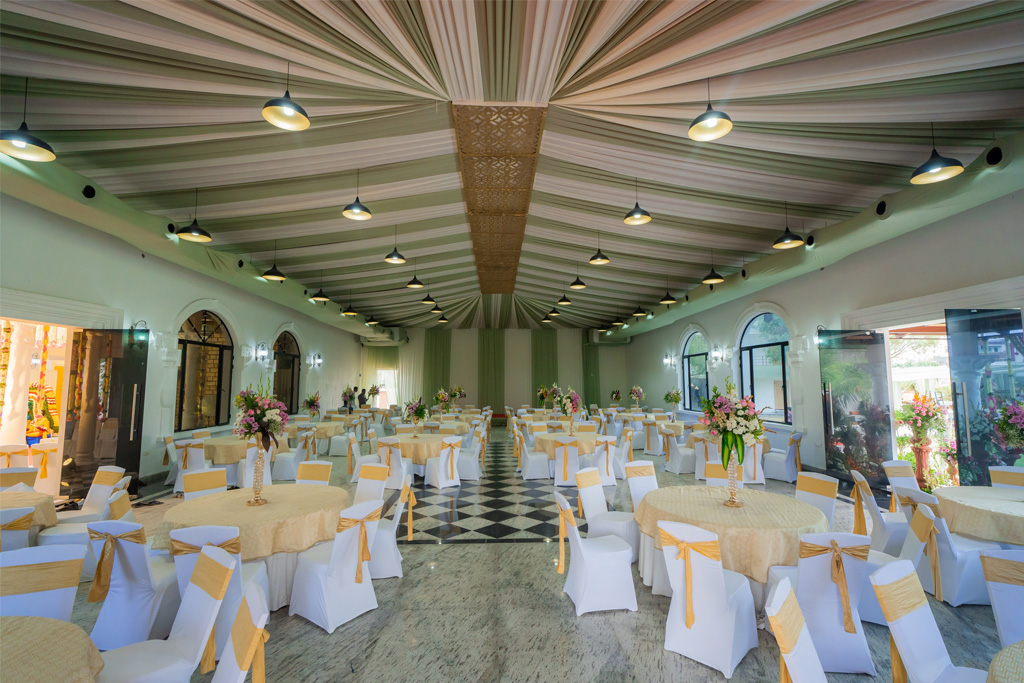
Banquet Hall vs Lawn Wedding: How They Differ in Real Weddings?
Couples often compare how banquet halls vs lawn weddings actually feel once the wedding begins. Not in theory, but when guests arrive, rituals start, and the day begins to move. The difference is less about looks and more about how people behave inside the space.
| What People Commonly Notice | Banquet Hall Wedding | Lawn Wedding |
|---|---|---|
| Overall feel | Calm, organised, and focused | Open, festive, and social |
| Guest movement | Mostly seated, with clear flow | Guests move around more freely |
| Ritual attention | Easy to keep everyone engaged | Attention depends on layout and timing |
| Comfort during long functions | Predictable and controlled | Needs planning around weather and heat |
| Sound and announcements | Clear and contained | Spreads out and needs support |
| Mood of the gathering | Formal and composed | Relaxed and celebratory |
| What People Commonly Notice | Banquet Hall Wedding | Lawn Wedding |
|---|---|---|
| Overall feel | Calm, organised, and focused | Open, festive, and social |
| Guest movement | Mostly seated, with clear flow | Guests move around more freely |
| Ritual attention | Easy to keep everyone engaged | Attention depends on layout and timing |
| Comfort during long functions | Predictable and controlled | Needs planning around weather and heat |
| Sound and announcements | Clear and contained | Spreads out and needs support |
| Mood of the gathering | Formal and composed | Relaxed and celebratory |
In a banquet hall, the function feels anchored. People know where to sit, where to look, and when to pause. This helps during rituals that need stillness and attention. At the same time, planning needs to be precise, because everything happens within a defined space.
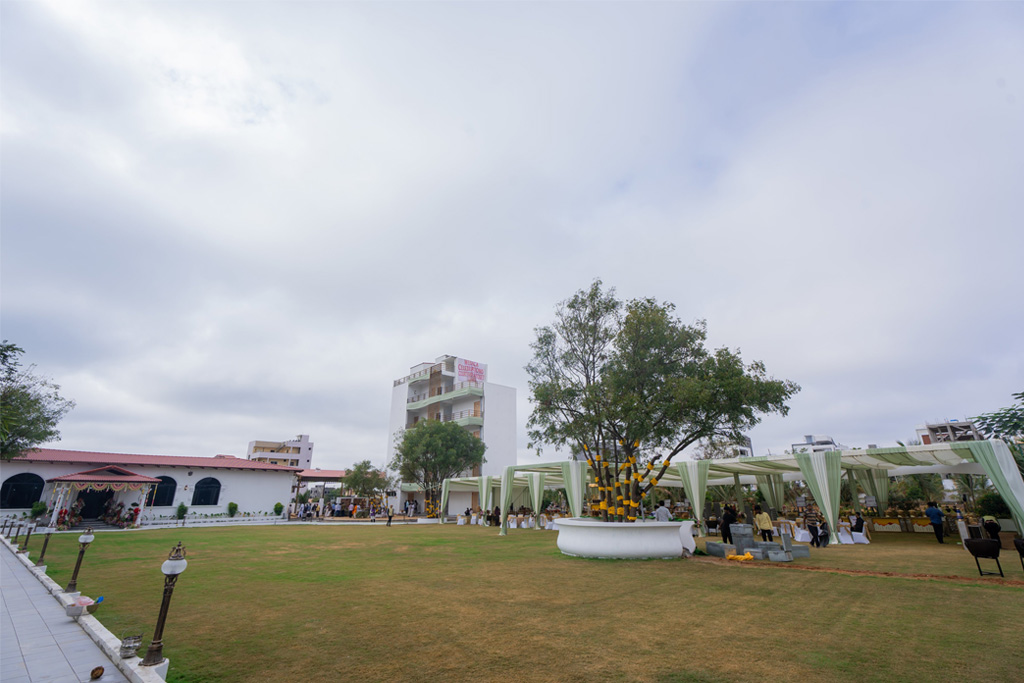
A lawn wedding feels different. The openness changes how guests interact. Conversations flow easily, movement feels natural, and celebrations feel larger. But this freedom also means the function depends more on wedding planning and weather conditions.
In the debate of lawn wedding vs banquet hall India, neither space is better by default. They simply shape the wedding in different ways.
Courtyard Wedding Functions: How They Look and Feel?
When couples look for a courtyard wedding setup India, they are usually imagining something calm and connected, not grand or overwhelming. Courtyard weddings sit somewhere between indoor and outdoor spaces, and that balance changes how functions unfold.
★ They don’t feel closed in, yet they don’t feel scattered either
★ Guests can move around, but they still remain visually connected to what’s happening
Courtyards work well when the function needs closeness without crowding. For many Telugu families, this setting feels familiar. It reflects temple layouts and traditional homes, where rituals happen in open centres with people gathered around. During ceremonies, elders can stay seated and involved, while others move quietly without breaking the flow.
What couples often appreciate is how settled these functions feel. The space holds the moment, instead of pulling attention away from it.
How Season and Wedding Theme Influence the Venue Choice?
Season quietly shapes many wedding decisions, even before decor or outfits come in. A summer afternoon function feels very different from a winter evening celebration. Heat, breeze, light, and sudden showers change how long guests stay seated, how often they move around, and how smoothly rituals progress.
Themes influence space choice through both behaviour and decor.
A traditional Telugu wedding with early-morning rituals needs a setting where guests can settle quickly, see the mandap clearly, and stay attentive without constant movement.
Themes like tropical or garden-style weddings lean heavily on openness. They feel natural when there’s air, greenery, and room for the celebration to spread out. When the same theme is recreated inside a banquet hall, even with detailed decor, it can still feel artificial. Guests sense the difference, even if the setup looks impressive.
How Mixing Venue Spaces Makes the Wedding Feel Complete?
Weddings feel fuller when every function doesn’t look and feel the same. When families move from one kind of space to another, the shift is noticeable. The mood changes, guests reset, and each event gets its own identity instead of blending into the next.
Couples today plan this consciously. A focused ritual in one setting, a relaxed gathering in another, and a lively celebration somewhere else keeps the days from feeling repetitive. Guests don’t feel tired of the venue, even if they attend multiple functions. This approach works best at a venue with a lawn, courtyard and banquet hall in the same place, where functions can flow without travel, delays, or re-coordination. The wedding moves forward naturally, instead of feeling stretched or reset every day.
Final Thoughts
Choosing a wedding venue is not really about a banquet hall vs lawn wedding or listing banquet hall wedding pros and cons. What matters more is how well the space supports the way an Indian wedding actually unfolds.
With weddings spread across multiple days, venues need to handle quiet rituals, social gatherings, and large celebrations without friction. Experienced venues understand this rhythm. They focus on flow, comfort, and coordination, not just décor or scale.
When the right spaces are managed well, the wedding feels balanced and effortless, allowing families and guests to stay focused on the celebration itself
FAQ’s
1. Can one wedding venue space work for all wedding functions?
It can, but weddings feel smoother when different functions use spaces that match their mood. Rituals, social gatherings, and celebrations often work better when the space changes with the function.
2. Is a banquet hall better than a lawn for Indian weddings?
Neither is better by default. Banquet halls and lawn shape the wedding differently. The choice depends on the function, time of day, guest movement, and overall flow of the celebration.
3. How does a lawn wedding work in India?
Lawn weddings feel open and festive, but they rely more on planning and coordination. Guest movement, weather conditions, and timing play a bigger role compared to indoor settings.
4. What kind of functions suit a courtyard wedding setup in India?
Courtyard setups work well for rituals and gatherings that need closeness without crowding. Many families prefer them for their familiarity and visual connection during ceremonies..
5. Why do couples prefer venues with multiple spaces today?
Because multi-day weddings need variety. Different spaces help functions feel distinct, reduce guest fatigue, and make the overall wedding easier to manage.
Popular Posts

The One Stop Destination Wedding Venue in Hyderabad
Team Wedica
SEP.23, 2024

The Ultimate Destination for Your Sangeet Ceremony in Hyderabad
Team Wedica
SEP.23, 2024

The Perfect Destination for Your Mehendi Ceremony in Hyderabad
Team Wedica
SEP.23, 2024

The Ultimate Destination for Your Sangeet Ceremony in Hyderabad
Team Wedica
SEP.23, 2024
Contact Us

