Blogs Details

Live Counters at Indian Weddings: How to Plan Them for Maximum Impact
By Team Wedica | May 20, 2026
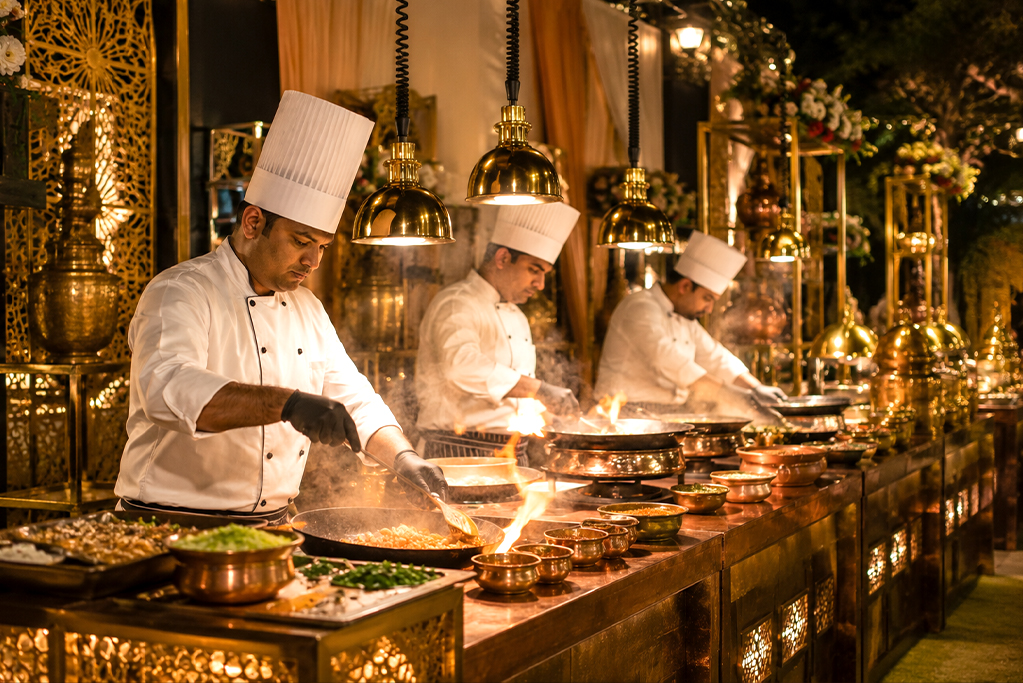
Live counters are becoming one of the biggest guest attractions at Indian weddings and are no longer just food counters. From interactive stalls to chefs preparing dishes live, they bring entertainment, guest interaction, customization, and even social media content into the wedding experience.
Considering taste progression, placing the right counters in the right flow matters here. If something too strong, spicy, or sweet is served at the beginning, the flavors of the dishes that follow may not stand out in the same way.
Therefore, the placement, selection, and management of live counters at Indian weddings play an important role in the overall dining experience.
Why Live Counters Have Become So Popular at Indian Weddings
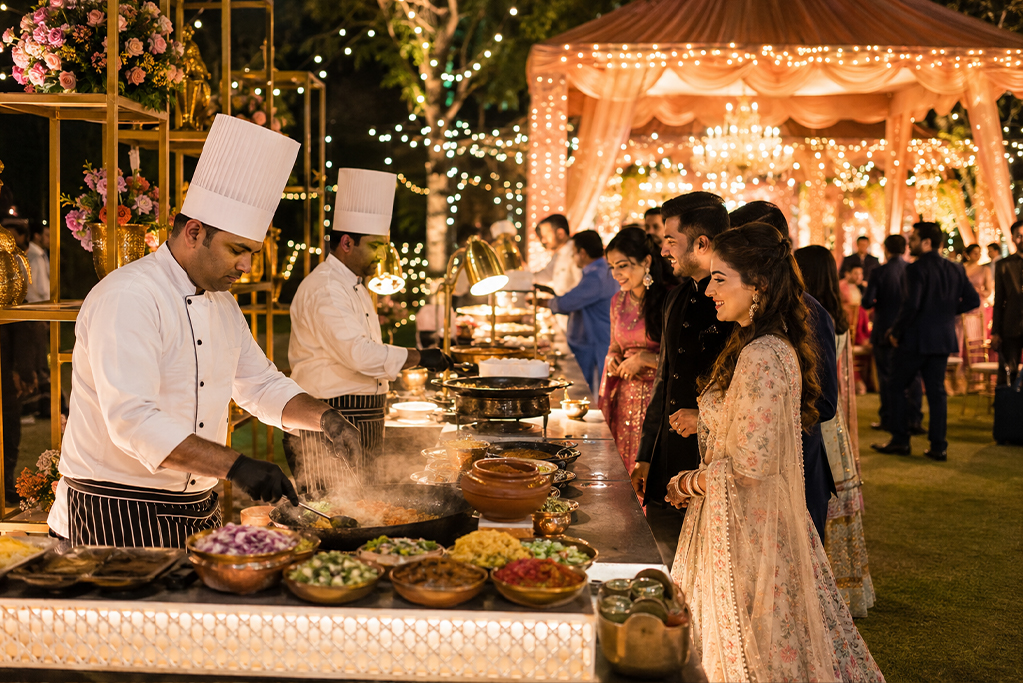
Live counters bring a different energy to weddings compared to regular buffet setups. Instead of guests simply picking food and moving away, live counters create interaction around the food itself.
Freshness is one of the biggest reasons behind their popularity.
Certain dishes like dosa, jalebi, golgappa, kebabs, pasta, and rumali roti taste better when served immediately after preparation. Live counters help maintain their texture, temperature, and flavor.
Live counters also add customization and visual appeal to the wedding experience.
Guests can adjust toppings, spice levels, or combinations based on their preference, while live preparation naturally attracts attention. Chefs tossing rumali rotis, grilling kebabs, or preparing interactive desserts often become part of the entertainment at the venue.
Live counters can also help reduce food wastage.
Since many dishes are prepared according to guest demand instead of being kept ready in large quantities, there may be less excess food left unused at the end of the event.
Traditional Buffet Service vs Live Counters at Indian Weddings
Both live counters and traditional buffet setups serve different purposes at weddings, which is why many events today use a combination of both for better flow, freshness, and guest experience.
Aspect | Traditional Buffet Service | Live Counters |
Guest Interaction | Limited interaction | Encourages conversations, customization, and engagement |
Freshness | Food may remain stored for some time | Food is usually served fresh and hot |
Crowd Movement | Faster and more stable flow | Can create gathering points and waiting areas |
Customization | Fixed preparation | Guests can adjust toppings, spice levels, fillings, or combinations |
Food Wastage | Higher chances of excess prepared food | Can help reduce excess preparation when managed properly |
Visual Experience | Functional serving setup | Adds entertainment and social media-friendly moments |
Ideal Use at Weddings | Large-scale staple food service | Selected experience-driven dishes |
Not Every Dish Should Be a Live Counter
Live counters work best for dishes that depend on freshness, texture, aroma, or customization. Many staple dishes like biryani, dal, curries, rice, or traditional sweets require bulk preparation, resting time, or continuous serving during the event.
Guests expect staple food items to remain easily accessible without waiting in long queues. Trying to convert every item into a live counter can create crowding, longer waiting times, and slower service flow.
Therefore, a hybrid food setup works best here. Staple dishes remain in the buffet section, while selected dishes that benefit from freshness, interaction, or visual appeal are added as live counters.
How to Plan Live Counters Without Creating Chaos
One of the most common issues with live counters is overcrowding.
Placing popular live counters that attract both guests waiting for food and guests stopping to watch the preparation near entrances, narrow walkways, or close to each other can affect movement across the entire dining area.
Dividing counters into separate food zones can help manage this better. High-demand counters can also be duplicated in larger weddings. Instead of keeping one large chaat or dosa station, two smaller counters placed in different areas may help distribute guests more evenly.
Service speed matters as much as presentation. Many successful live counters use semi-live preparation, where some ingredients remain pre-prepared in the backend while the final cooking or finishing happens live in front of guests. This helps maintain freshness without creating long waiting times.
Matching Live Counters With the Wedding Theme
Choosing counters that suit the wedding style, guest preferences, and venue setup usually creates a more balanced dining experience.
For example, a traditional Telugu wedding or village-style wedding may suit live dosa stations, punugulu counters, bhajji stalls, brass chai setups, fresh sugarcane juice, or wood-fire cooking arrangements. These counters naturally blend with traditional décor, local cuisine, and cultural styling.
Modern luxury weddings may include live grills, gourmet dessert counters, mocktail bars, or curated international food stations with premium presentation styles.
Kids’ functions often work better with playful counters like waffles, popcorn, cotton candy, mini pancakes, or chocolate stations.
The counter design also contributes to the theme. Elements like brass vessels, banana leaf serving, wooden carts, clay pots, vintage setups, or themed lighting can help the counters feel more connected to the wedding atmosphere.
Best Live Counter Ideas for Indian Weddings
Different types of live counters suit different wedding styles, guest groups, and event timings. Choosing a balanced mix usually works better than adding too many counters at the venue.
Live Counter Type | Popular Options |
Chaat & Street Food Counters | Golgappa, dahi puri, pav bhaji, tawa pulao |
South Indian Live Counters | Dosa, pesarattu, appam, paniyaram |
Tandoor & Grill Counters | Rumali roti, kebabs, BBQ grills, naan |
Dessert Counters | Jalebi with rabdi, malpua, kulfi, waffles |
Beverage Counters | Chai, filter coffee, mocktails, badam milk |
Kids’ Live Counters | Cotton candy, popcorn, mini pizza, pancakes |
Traditional Telugu Counters | Punugulu, mirchi bajji, gongura-based snacks |
Interactive International Counters | Pasta, tacos, sushi, shawarma |
Final Thoughts
In many weddings today, guests may forget the exact menu, but they often remember the counters they gathered around the most. A well-planned live counter setup does not only serve food fresh, but also keeps the dining experience active, engaging, and naturally connected to the overall atmosphere of the wedding.
FAQ’s
1. How many live counters are usually enough for an Indian wedding?
The number of live counters usually depends on the guest count, venue space, and overall food menu. In many weddings, a few well-planned counters often work better than adding too many options that may create crowding and slower service.
2. Which dishes work best as live counters at Telugu weddings?
Dishes like dosa, pesarattu, punugulu, mirchi bajji, jalebi, kebabs, and filter coffee setups are commonly used at Telugu weddings because they taste better when served fresh and hot.
3. Are live counters suitable for indoor wedding venues?
Yes, many live counters can work well indoors when planned with proper ventilation, spacing, and crowd movement. Compact counters and controlled smoke setups are often preferred for indoor venues.
4. Do live counters work well for daytime weddings?
Yes, daytime weddings often include counters like dosa stations, fresh juice setups, chai counters, appam counters, or light street food stalls that suit morning or afternoon functions better.
5. Can live counters be planned for smaller family weddings?
Yes, smaller weddings can also include selected live counters instead of large buffet spreads. A limited number of counters may help create a more interactive dining experience without requiring a very large setup.
Popular Posts

The One Stop Destination Wedding Venue in Hyderabad
Team Wedica
SEP.23, 2024

The Ultimate Destination for Your Sangeet Ceremony in Hyderabad
Team Wedica
SEP.23, 2024

The Perfect Destination for Your Mehendi Ceremony in Hyderabad
Team Wedica
SEP.23, 2024

The Ultimate Destination for Your Sangeet Ceremony in Hyderabad
Team Wedica
SEP.23, 2024
Contact Us

