
Tips for Managing Large Indian Guest Lists Without Chaos
By Team Wedica | Apr 30, 2026
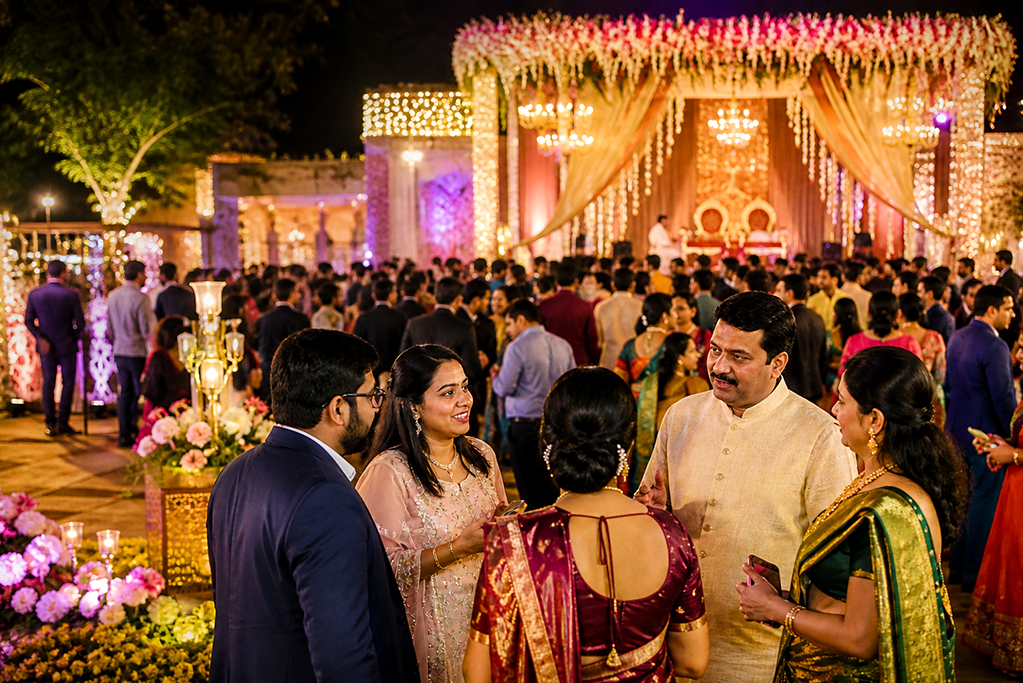
In Indian weddings, the guest list is rarely just a guest list. It is memory, obligation, family politics, old equations, social visibility, and emotional pressure — all packed into one spreadsheet no one fully controls. That is why guest list chaos usually begins long before the wedding day. Not because the number is too high, but because too many names enter the list without enough thought, and too many decisions are left vague for too long.
Indian weddings, hospitality carries weight. But hospitality becomes difficult when the guest list is built on habit instead of clarity.
Why Do Large Indian Guest Lists Become So Hard to Handle?
In many families, names are added much more easily than they are questioned.
That is where the problem starts. One person says, “We should call them also.” Another says, “They invited us to their son’s wedding.” Someone else says, “It won’t look nice if we leave them out.” Before long, the guest list stops being a reflection of relationships and starts becoming a collection of unresolved social anxieties.
A large Indian wedding guest list becomes difficult when everyone has the right to add names, but no one has the authority to define the logic. And once that logic goes missing, the entire planning process gets affected. The venue count changes. Catering numbers become unreliable. Guest accommodation planning gets distorted. Invitation batches keep shifting.
Stop Treating the Guest List Like One Giant Emotional Bucket
Not every guest plays the same role in a wedding, so not every guest should be handled the same way.
Some guests are central to the wedding. Some are important because of long-standing family ties. Some are courtesy invites. Some are only relevant to one function. Some are outstation responsibilities. And some, if people are honest, are there only because no one wanted the discomfort of asking whether they still matter
A useful line here is simple: if you have not spoken to a relative in the last one year, they should not automatically be treated as a priority guest.
That does not mean they should never be invited. It means they should not be placed in the same emotional category as the people who are actually present in your life. Once families begin separating guests by closeness, function relevance, and logistical importance, the list becomes easier to manage and much easier to defend.

Build One Central Guest Tracking System Before Opinions Start Multiplying
A large Indian wedding does not fall apart because one person forgot one name. It falls apart because three different people think someone else has already handled that name.
That is why one central tracking system matters so much. It is not about being overly formal. It is about preventing confusion before it spreads. Whether you use a spreadsheet, a shared document, or a planning app is secondary. What matters is that there is one list, one source of truth, and one person or small group responsible for keeping it updated.
That list should tell you more than just names. It should show who belongs to which side, whether the invite has gone out, whether they have responded, how many people are expected, which functions they are attending, and whether they need rooms or transport. The moment guest information starts living in WhatsApp chats, memory, side calls, and separate family notebooks, chaos has already entered the wedding.
Plan Function-Wise Attendance. Do Not Pretend Everyone Comes for Everything.
One of the biggest guest list mistakes in Indian weddings is assuming one invite equals one full wedding presence. It rarely does.
An Indian wedding is not one event with many people. It is many events with different layers of people. Some guests come only for the muhurtam. Some show up for the reception. Some guests only plan for sangeet because they are closer to one side. Some outstation relatives are present for everything. If this is not tracked clearly, planning begins to fail in quiet but expensive ways.
The smarter way is to stop thinking in terms of one overall guest count and start thinking function by function. That shift alone brings much more realism into planning.
Set a Cut-Off for Additions, or the List Will Keep Growing Until the Wedding Day
Every Indian wedding has a dangerous phase where the guest list stops feeling like a plan and starts feeling like an open suggestion box.
That is the moment you need a cut-off.
A guest list without a deadline becomes a moving target, and no event runs smoothly when the headcount is still emotionally negotiable in the final stretch.
This is where families need calm firmness. Each side should be asked to finalise names by a specific point. Not because the wedding is becoming rigid, but because hospitality depends on stability. The later people are added, the harder it becomes to host them properly.
Treat RSVPs More Seriously, Even If Indian Wedding Culture Is Flexible
Yes, RSVP culture in India is imperfect. Blind optimism is not a planning method.
Even if you do not get perfect responses, you still need some version of clarity. Who is likely? Who is confirmed? Who is doubtful? Who needs a follow-up? Those distinctions matter. They affect food, rooms, transport, welcome planning, and how much attention the family needs to keep aside for guest handling.
A wedding cannot be built entirely on “they will probably come.” That sentence has damaged enough catering estimates already.
Outstation Guests Need More Than Warmth. They Need Structure.
Outstation guests are where Indian wedding hospitality either feels graceful or starts falling apart.
These guests do not just need to be invited. They need directions, room clarity, arrival coordination, venue understanding, and one reliable point of contact. If this is not planned well, the family spends the busiest part of the wedding answering the same questions repeatedly.
That kind of chaos is avoidable. Outstation guests should be treated as a separate coordination stream, not just a line item on the same list. The clearer their journey is from arrival to stay to function, the smoother the wedding feels for everyone.
Hospitality Does Not Manage Itself Just Because Many People Are Around
Indian weddings often assume hospitality will somehow happen naturally because there are so many relatives and so much activity. In reality, that is exactly why it gets missed.
When everyone is hosting, no one is clearly hosting.
Someone needs to own the welcome desk. Someone needs to handle elder guests. Someone should know the room allocation. Someone must be reachable for transport confusion. Someone needs to guide people across venues or functions. These roles do not make the wedding feel mechanical. They make it feel cared for.
A guest list is not only about who gets invited. It is also about whether the people who arrive feel received.
Final Thoughts
A large Indian guest list does not automatically make a wedding chaotic. But a guest list built on guilt, vague additions, weak tracking, and silent assumptions almost always will. The goal is not to make the wedding smaller just to make it easier. The goal is to make the scale more intentional, so the people who matter most do not get lost inside a crowd that was never clearly defined.
FAQ’s
1. How do you manage a large Indian wedding guest list without confusion?
Start with one central guest tracking system that includes names, family side, invite status, RSVP status, function-wise attendance, and accommodation or transport needs.
2. Why should wedding guests be divided into categories?
Separating guests by closeness, function relevance, courtesy invites, and outstation needs helps families make better decisions and manage the list with more clarity and less emotional pressure.
3. Why is function-wise guest planning important in Indian weddings?
Indian weddings involve multiple events, and not every guest attends every function. Planning attendance for each event separately gives more accurate numbers for catering, seating, transport, and hospitality.
4. How can families prevent the guest list from growing endlessly?
Set a clear deadline for additions and ask each side of the family to finalise names by that point. Without a cut-off, the guest list keeps expanding, making invitations, headcounts, and hospitality harder to manage properly.
Popular Posts

The One Stop Destination Wedding Venue in Hyderabad
Team Wedica
SEP.23, 2024

The Ultimate Destination for Your Sangeet Ceremony in Hyderabad
Team Wedica
SEP.23, 2024

The Perfect Destination for Your Mehendi Ceremony in Hyderabad
Team Wedica
SEP.23, 2024

The Ultimate Destination for Your Sangeet Ceremony in Hyderabad
Team Wedica
SEP.23, 2024
