Blogs Details

Haldi Ceremony Dress Ideas for Bride and Groom (Indoor + Outdoor)
By Team Wedica | Mar 13, 2026
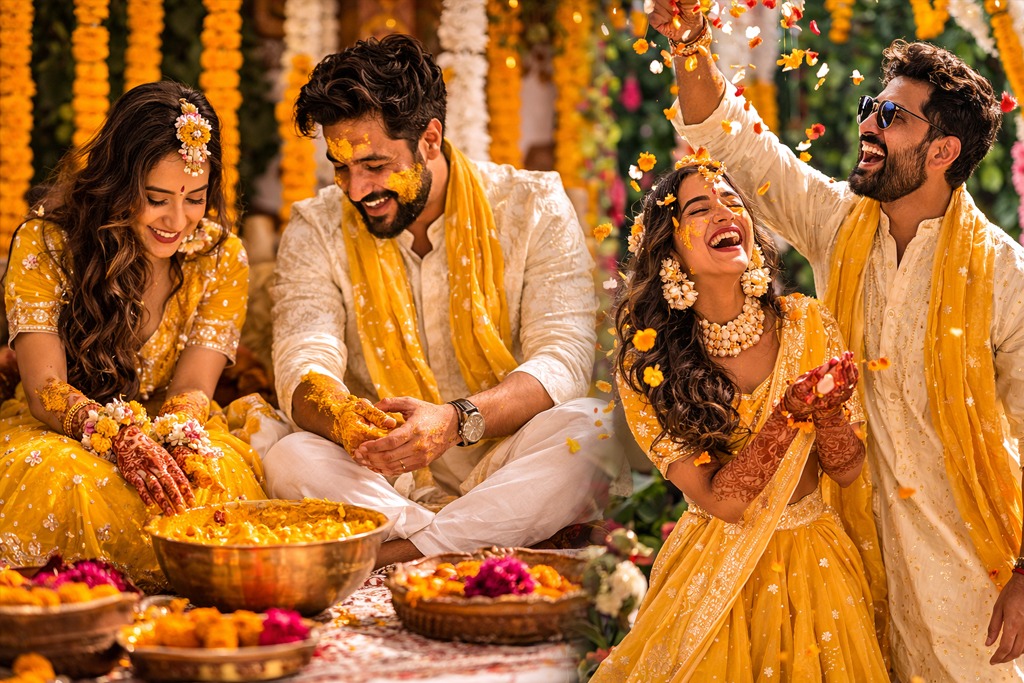
Haldi isn’t a small ritual anymore. It’s a full-blown visual moment. There’s décor, there’s a photographer in your face from the first turmeric touch, and there’s always that one cousin who turns it into a mini game show. Which means the haldi outfit today has a job. It must look festive and premium in pictures, but also be practical enough to survive turmeric stains, water splashes, sitting-down rituals, and chaos that nobody warned you about.
This is why haldi styling is very different from sangeet or reception styling. Here, the winning look isn’t the heaviest one. It’s the one that looks fresh, clean, joyful, and effortless, especially in daylight. And it applies to both the bride and groom.
Below is a venue-wise guide for haldi ceremony dress ideas for bride and groom, covering both indoor and outdoor scenarios, with pairing ideas that photograph beautifully.
What Makes a Haldi Outfit Actually Work
Let’s start with the fabric logic. It should be breathable and stain-friendly wins. Haldi needs fabrics that don’t trap heat and don’t feel precious. The safest picks are cotton, mulmul, linen, chanderi, light georgette. Avoid heavy silks, velvet, and anything that looks expensive enough to make you anxious.
Then comes the silhouette logic. Seated photos matter. Haldi has a lot of sitting shots with close-ups of applying turmeric, family blessings, and candid laughter. Your outfit must look good while seated, not just while standing.
Next comes the color. Yellow is classic, but not compulsory. Yellow is traditional and photographs well, but so do ivory/cream with yellow accents, soft florals, pista tones, and mango shades. The goal is glow, not strict uniform.
For comfort logic, picking sleeves, dupatta, and footwear decides your mood. If you’re fixing your dupatta every 2 minutes or your sleeves feel tight, your expressions in photos will show it. Haldi is about ease.
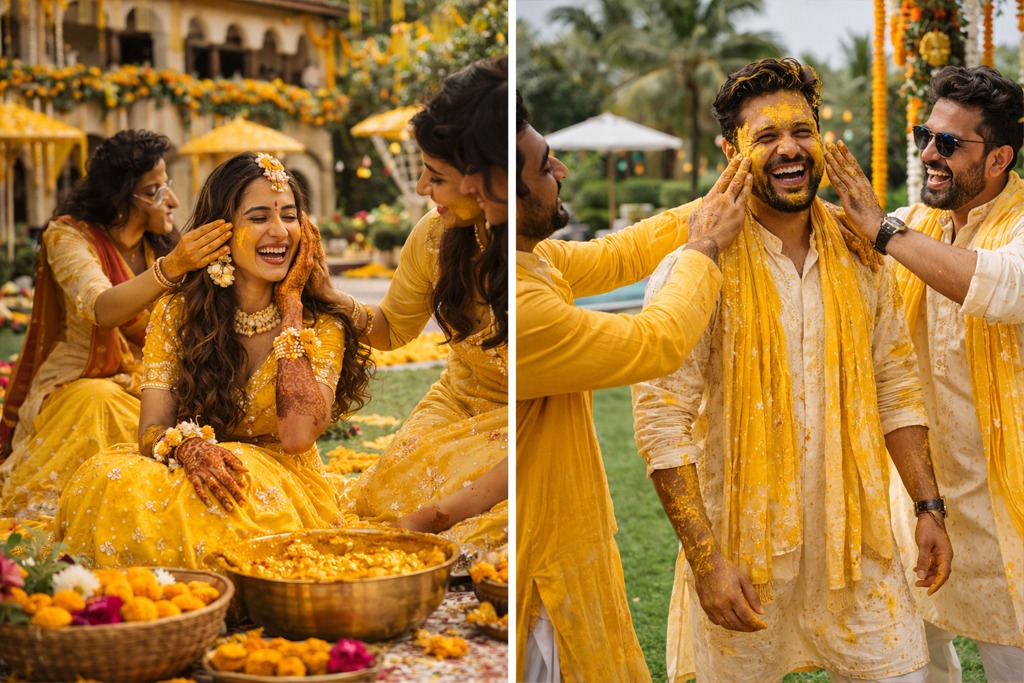
Outdoor Day Haldi (Lawn / Courtyard / Resort)
Outdoor haldi venue usually means sunlight, heat, movement, and lots of candid photos. Go matte, breathable, and secure.
Bride haldi outfit ideas:
● Yellow mulmul/cotton kurta + sharara with a light dupatta pinned on both shoulders
● Ivory cotton/linen saree + yellow blouse (very photogenic in daylight)
● Lightweight floral printed lehenga (yellow/peach/mint accents) with a simple blouse
● Traditional cotton-silk saree in yellow/cream with flower hair styling (especially South-style setups)
Groom haldi outfit ideas:
● Ivory/white kurta + pajama with a thin yellow stole
● Beige kurta set with a yellow pocket square/stole for coordination
● Dhoti + angavastram (as per custom) for a traditional outdoor haldi
Outdoor styling tip: Matte fabrics look premium in the sun. Satin can look shiny and sweaty very fast.
Outdoor Poolside / Water Games Haldi
If your haldi includes water splashes, games, or a poolside setup, the outfit should be event-ready but not restrictive.
Bride haldi outfit ideas:
● Co-ord set (short kurta/top + palazzo) in yellow/ivory
● Short kurta + comfortable sharara (no heavy dupatta)
● Light skirt set with a neatly secured dupatta only if needed for photos
Groom haldi outfit ideas:
● Simple cotton kurta + pajama (easy movement)
● Kurta + relaxed dhoti-style bottom if culturally aligned and practical
Keep accessories minimal and hair tied. You want to look good without worrying about every splash.
Outdoor Windy Haldi (Terrace / Beachside / Open Setup)
Wind makes loose dupattas and drapes look messy in photos. Here, pinning and structure matter more than extra styling.
Bride haldi outfit ideas:
● Pre-stitched saree drape (secure and fuss-free)
● Suit set with a heavily pinned dupatta (no loose ends)
● Sharara set with cape-style dupatta (stays put better)
Groom haldi outfit ideas:
● Fitted kurta set in beige/ivory
● Stole tucked and secured, not floating loose
Windy setup tip: Avoid long trailing dupattas and anything that depends on perfect draping.
Outdoor Traditional Haldi (Temple-linked / South-style)
This is a more cultural, traditional visual setting. It looks best when both bride and groom lean into simple tradition instead of heavy fashion.
Bride haldi outfit ideas:
● Cream/yellow cotton-silk saree with jasmine/marigold hair
● Simple traditional saree drape with minimal but classic jewellery
Groom outfit ideas:
● White/cream dhoti + angavastram (as per family tradition)
● Simple kurta if the event is slightly modern but still traditional
Traditional styling tip: Flowers become the hero here, keep jewellery lighter and let the look feel graceful.
Indoor Day Haldi (Home / Apartment / Small Hall)
Indoor haldis are more intimate and closer-shot. The camera captures details better, and you can look cleaner and more polished without going heavy.
Bride haldi outfit ideas:
● Yellow chanderi kurta set with light embroidery
● Sharara set with neat silhouette and minimal work
● Ivory outfit with yellow floral jewellery (premium minimal look)
Groom outfit ideas:
● Off-white kurta + pajama
● Light jacket optional if you want to look more groom-coded without overdressing
Keep the neckline clean. Indoor portraits look best when styling isn’t crowded.
Indoor Banquet / Decor Stage Haldi (Photographer + Lighting)
This is where haldi starts feeling like an event. The backdrop is styled, the lighting is controlled, and the outfits can be slightly more premium.
Bride haldi outfit ideas:
● Premium sharara set in mango yellow with clean embroidery
● Ivory saree + yellow blouse with statement floral jewellery
● Short kurta + sharara with scallop edges or thread work (light, not heavy)
Groom outfit ideas:
● Beige kurta + light yellow Nehru jacket (instant polished look)
● Ivory kurta + textured waistcoat (subtle detail reads well in photos)
Here, the goal is styled, not heavy. Keep fabrics light but silhouettes sharp.
Indoor Evening Haldi (Warm Lights / Low Light)
Low light needs colours that hold their richness. Pale yellow can look washed out in warm evening lighting, so slightly deeper tones help.
Bride haldi outfit ideas:
● Mango yellow/mustard suit set in chanderi or georgette
● Light lehenga with controlled shimmer (very minimal)
● Anarkali-style kurta set that looks elegant without heaviness
Groom outfit ideas:
● Cream kurta set with mild texture
● Bandhgala-style kurta in cream/yellow tones if it’s a more formal evening setup
For this setting, deeper yellows photograph better than very pale yellows under warm lights.
Final Thoughts
Haldi is the one function where your expressions matter more than your embroidery. The best haldi outfits are the ones that keep you comfortable, photograph cleanly, and let you enjoy the ritual without worrying about stains or constant fixing. Choose your look based on the venue and time of day, coordinate as a couple in a simple palette, and let the joy do the rest.
FAQ’s
1. What is the best colour for haldi outfits for the bride and groom?
Yellow is the classic choice, but ivory/cream with yellow accents, pista tones, mango shades, and soft florals also look great, especially depending on whether the function is indoors or outdoors.
2. What fabrics work best for haldi ceremonies?
Breathable, stain-tolerant fabrics work best, such as cotton, mulmul, linen, chanderi, and light georgette. Heavy silks and delicate fabrics are best avoided because haldi stains are hard to remove.
3. How should the bride and groom coordinate their haldi outfits?
The easiest pairing is the bride in yellow and the groom in ivory. Other clean combinations include a bride in ivory with yellow accents and a groom in beige, or a floral-print bride outfit with the groom in one matching solid colour from the print.
4. What should couples wear for outdoor haldi vs indoor haldi?
For outdoor haldi, choose matte, breathable outfits that handle heat and sunlight well. For indoor haldi, you can go slightly richer in texture and styling since lighting is controlled, but the outfits should still stay comfortable and haldi-safe.
5. What are the most common haldi outfit mistakes to avoid?
Wearing heavy silks, long trailing dupattas, tight sleeves, over-accessorising (especially wrists), and choosing outfits that look good only when standing but feel uncomfortable during long seated rituals.
Popular Posts

The One Stop Destination Wedding Venue in Hyderabad
Team Wedica
SEP.23, 2024

The Ultimate Destination for Your Sangeet Ceremony in Hyderabad
Team Wedica
SEP.23, 2024

The Perfect Destination for Your Mehendi Ceremony in Hyderabad
Team Wedica
SEP.23, 2024

The Ultimate Destination for Your Sangeet Ceremony in Hyderabad
Team Wedica
SEP.23, 2024
Contact Us

