Blogs Details

Wedding Guest Accommodation Planning Made Easy
By Team Wedica | Feb 26, 2026

Planning a wedding involves many details. Accommodation often gets missed among outfits, rituals, catering, and guest lists. This can create urgency and lead to confusion. In a wedding, guest accommodation has two meanings. One refers to guest arrangements on the wedding day, like seating and comfort areas. The other, more crucial meaning is where guests stay before and after the wedding.
This blog mainly focuses on managing guest stay planning practically, without making it complicated.
Wedding Accommodation: Event Seating and Guest Lodging
Before diving in, it helps to separate the two ideas clearly.
Guest Stay Before and After the Wedding
In most weddings, families arrive one or two days early. They stick together, go to pre-wedding events, celebrate, and leave when it’s all done. This part needs planning. You’ll book rooms for wedding guests, coordinate arrivals, and make sure everyone is comfortable.
Wedding-Day Guest Comfort
This would include things like seating arrangements, rest areas for senior guests, and small support spaces during the ceremony. It is important, but typically easier to deal with once the venue has been finalised.
The majority of the actual wedding planning work involves managing the guests. This is where budgeting, coordination, and communication are most important.
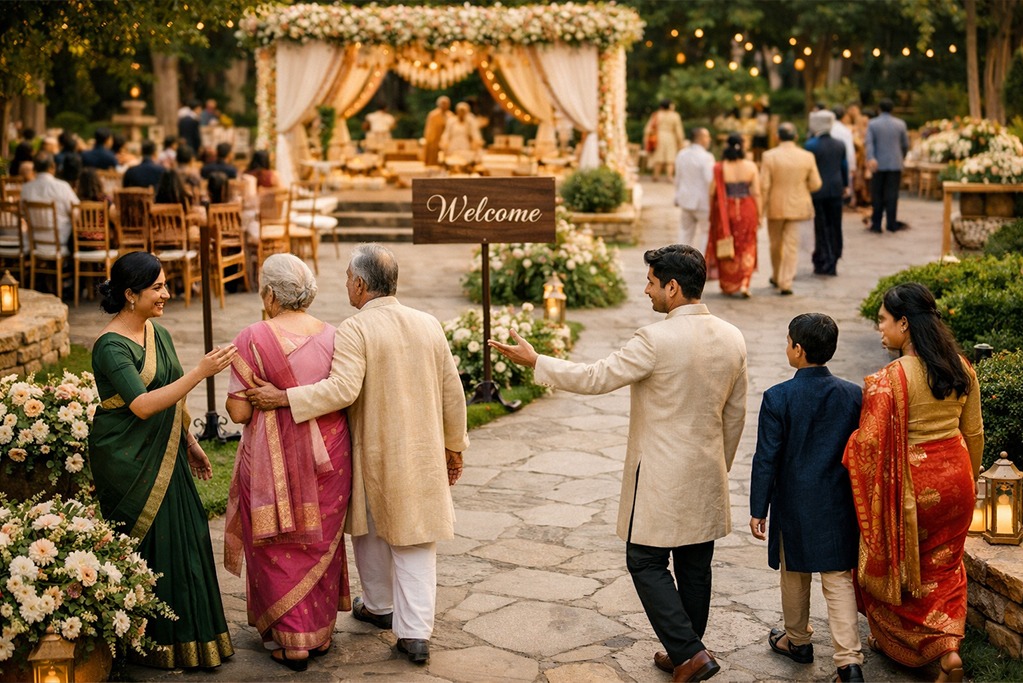
Planning Guest Movement Around the Wedding
Plan ahead for your wedding by clearly communicating with your guests. All guests should have their accommodations location, contact information, and check-in time in advance so there are no questions upon arrival. Instead of having many family members calling the couple, give one family member the responsibility of managing any accommodation-related queries.
Each time a guest arrives at the accommodation, they typically do so at different intervals. Organising 1 or 2 outside rooms can help accommodate early check-ins and/or unexpected stays. On the day of your wedding, be sure to coordinate how your guests will get between their accommodations and the venue so that they know how to get there when the time comes. If you’re thoughtful and plan ahead, the guest logistics for your wedding will go smoothly and be organised.
How to Choose Accommodation That Makes Travel Easy?
Choose accommodation close to the wedding venue to reduce travel time. Long commutes between the stay and the venue can tire guests, especially the elderly.
When selecting the property, consider:
● Lift access
● Distance from the main venue
● Safety and connectivity
● Availability of extra beds
Book Rooms Early and Confirm the Details
If your wedding falls during peak season, rooms get booked quickly. It’s always better to block rooms in advance rather than searching at the last minute.
When confirming bookings, clarify:
● Check-in and check-out times
● Cancellation policies
● Payment responsibilities
● Extra bed charges
This is where having a simple wedding accommodation checklist helps; even a basic document listing room count, dates, and guest names keeps everything organised.
How to Keep Families Engaged, Not Just Booked?
If guests are arriving a day or two early, you can also suggest nearby places they might enjoy exploring. A quick list of local attractions, shopping areas, cafés, or cultural spots gives them something to do during free hours. Many guests appreciate the chance to step out, explore the city, and make the trip feel like a mini getaway rather than just attending an event. These small, thoughtful gestures turn guests’ stay planning wedding celebrations into a warm, shared experience instead of just a room booking.
How to Coordinate Arrival and Departure Smoothly?
Guests often arrive at different times. Some may come early for pre-wedding rituals. Others may arrive on the wedding day itself. Share clear directions to the property. If many guests are unfamiliar with the area, sending a location link in advance helps.
Transport arrangements are optional, depending on the scale of the wedding. For close family or elderly guests, arranging pickup from the airport or railway station can be thoughtful. For others, sharing reliable cab options may be enough.
A Quick Note on Wedding-Day Comfort
Coordinating guest stays needs planning, but the wedding day also needs careful thought. Make sure the seating is comfy and enough so guests can relax and enjoy the celebration. Elderly family members should easily access rest areas. This helps them avoid unnecessary strain. It is always a good thing to have a trusted family member or coordinator to deal with small questions from the guests.
There are always last-minute changes. You may notice additional guests, changes in seating, and small timing adjustments. This is completely normal. It is more important to be calm and flexible than to control everything.
What are the Common Mistakes to Avoid?
Even well-planned weddings can face accommodation issues. Most problems come from small oversights.
Underestimating staying guests
Some relatives may decide late that they’re staying overnight. A buffer prevents last-minute scrambling
Poor communication
If guests don’t know where they’re staying or how to reach the venue, confusion spreads quickly.
Ignoring elderly comfort
Simple things like lift access, nearby rooms, and reduced walking distance make a big difference.
Not confirming bookings properly
Verbal promises aren’t enough during peak season. Always get written confirmation.
Final Thoughts
At its core, wedding guest accommodation isn’t about luxury. It’s about helping the people who came to celebrate with you feel comfortable and welcomed.
Most weddings have a simple flow. Families arrive, stay together, enjoy the celebrations, and leave when it’s all done. When guests stay, planning wedding events is done early, with clear communication and a small buffer for changes, everything feels manageable.
You don’t need a complex system. You need thoughtful coordination, realistic planning, and clarity. When guests feel settled, the celebration feels warmer. And that’s what truly makes a wedding memorable.
FAQ’s
1. How early should we book wedding guest accommodation?
It’s best to block rooms at least 2–3 months in advance, especially during peak wedding season. Early booking ensures better availability, smoother coordination, and often more reasonable pricing.
2. How many rooms should we book for wedding guests?
Start by identifying out-of-town families and close relatives who are likely to stay. Once you estimate the number, add one or two extra rooms as a buffer to handle last-minute additions or unexpected changes.
3. Should we arrange transport for guests staying at the hotel?
If the accommodation is close to the venue, guests can usually manage easily. However, arranging transport for elderly guests or close family members can make things more convenient and comfortable.
4. What should be included in a wedding accommodation checklist?
A simple wedding accommodation checklist should include the number of rooms booked, guest names assigned to each room, check-in and check-out dates, payment details, cancellation policies, and contact information of the property.
5. How can we avoid confusion on the wedding day?
Share room details in advance, keep one person responsible for guest coordination, and maintain a small buffer in seating and catering. Clear communication and flexibility prevent most last-minute issues.
Popular Posts

The One Stop Destination Wedding Venue in Hyderabad
Team Wedica
SEP.23, 2024

The Ultimate Destination for Your Sangeet Ceremony in Hyderabad
Team Wedica
SEP.23, 2024

The Perfect Destination for Your Mehendi Ceremony in Hyderabad
Team Wedica
SEP.23, 2024

The Ultimate Destination for Your Sangeet Ceremony in Hyderabad
Team Wedica
SEP.23, 2024
Contact Us

