Blogs Details

Engagement Ceremony Traditions Across India: A Promise Beyond Rings
By Team Wedica | Dec 26, 2025
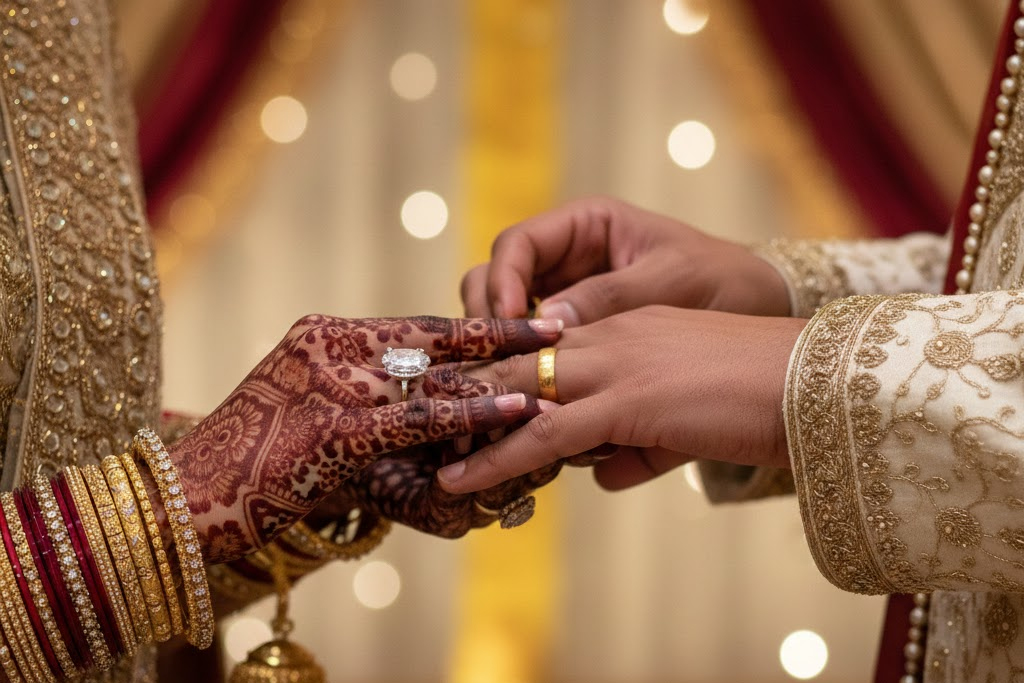
The engagement is the first public affirmation of a love long decided. Until then, it’s all hidden photos, cropped pictures, or just the hands. But the engagement makes everything official, and you can finally share your happiness without holding back.
In India, an engagement is much more than announcing your partner to the world. It is not just a confirmation that two people have chosen each other. It is the coming together of two families, cultures, and sets of traditions.
Most engagements today are celebrated in grand venues that offer space, elegance, and a sense of occasion. With families gathered, rituals performed, and moments shared freely, the celebration feels complete and unhurried. Some families keep it simple at home. No matter how it is done, the engagement marks the start of a shared journey filled with blessings, acceptance, and warmth.
Why Engagement Ceremonies Hold Deep Importance?
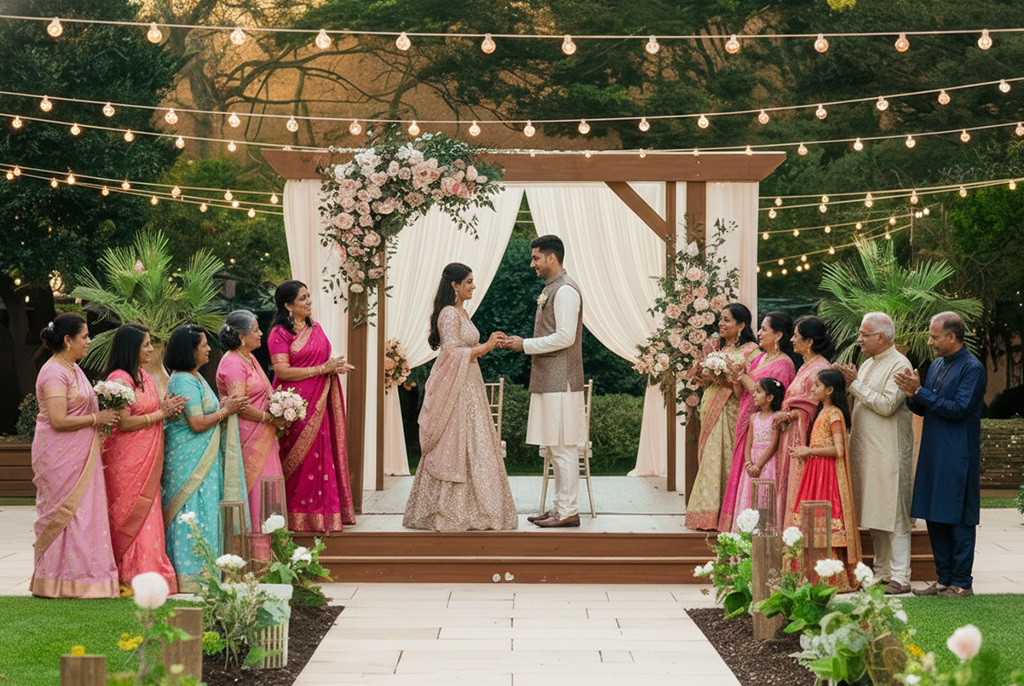
An engagement in India is not just a date on the calendar. It carries a meaning that goes beyond the ring or the photos. For many families, this is the moment when the relationship becomes real and official.
It is the first step where both families come together under one roof, offer their blessings, and acknowledge the couple as future husband and wife. From this moment, wedding preparations begin with shared excitement and purpose.
Some families see the engagement as the moment when responsibilities shift. The couple begins planning their life together, and the families start supporting them as one unit. It is simple, but emotionally powerful, a quiet promise that the future will be shared, supported, and celebrated together.
How Are Engagement Traditions Different Across India?
From simple home gatherings to traditional rituals, engagement customs vary across India. The table highlights how each region celebrates the day.
| Region / State | Common Ceremony Name | How It’s Celebrated (Short, Accurate Notes) |
|---|---|---|
| North India | Roka, Sagai | Roka confirms the match; Sagai includes tilak, gifts, and in many families, ring exchange |
| Punjab | Roka / Thaka / Shagan | Families bless the couple with sweets, money, clothes, and traditional gifts |
| Gujarat | Gol Dhana | Jaggery and coriander seeds exchanged before or with the ring ceremony |
| Maharashtra | Sakhar Puda | Sugar gifted to the bride; many families hold a separate ring ceremony |
| Karnataka | Nischaya / Nischay Tamulam / Nischitartham | Families exchange gifts, bless the couple, and confirm the alliance; ring ceremony may be separate |
| Tamil Nadu | Nischayathartham | Formal announcement with gifts like fruits, turmeric, flowers, and blessings |
| Telugu Communities | Nischitartham | Auspicious items exchanged; families fix the wedding date; rings may or may not be part of the ritual |
| Kerala (Hindu) | Nischayam | Simple gathering where families exchange gifts and often announce the wedding date |
| Kerala (Christian) | Engagement / Betrothal | Ring ceremony held in church or hall, followed by a family gathering |
| Bengal | Aashirbaad / Tattva Exchange | Families bless the bride and groom separately and exchange gift trays |
| Assam | Juron (Bride’s Side), Pani Tola | Bride receives traditional items like mekhela-sador, betel nuts, and rice |
| Odisha | Nirbandh | Families meet, exchange gifts, and give verbal confirmation of the alliance |
| Region / State | Common Ceremony Name | How It’s Celebrated (Short, Accurate Notes) |
|---|---|---|
| North India | Roka, Sagai | Roka confirms the match; Sagai includes tilak, gifts, and in many families, ring exchange |
| Punjab | Roka / Thaka / Shagan | Families bless the couple with sweets, money, clothes, and traditional gifts |
| Gujarat | Gol Dhana | Jaggery and coriander seeds exchanged before or with the ring ceremony |
| Maharashtra | Sakhar Puda | Sugar gifted to the bride; many families hold a separate ring ceremony |
| Karnataka | Nischaya / Nischay Tamulam / Nischitartham | Families exchange gifts, bless the couple, and confirm the alliance; ring ceremony may be separate |
| Tamil Nadu | Nischayathartham | Formal announcement with gifts like fruits, turmeric, flowers, and blessings |
| Telugu Communities | Nischitartham | Auspicious items exchanged; families fix the wedding date; rings may or may not be part of the ritual |
| Kerala (Hindu) | Nischayam | Simple gathering where families exchange gifts and often announce the wedding date |
| Kerala (Christian) | Engagement / Betrothal | Ring ceremony held in church or hall, followed by a family gathering |
| Bengal | Aashirbaad / Tattva Exchange | Families bless the bride and groom separately and exchange gift trays |
| Assam | Juron (Bride’s Side), Pani Tola | Bride receives traditional items like mekhela-sador, betel nuts, and rice |
| Odisha | Nirbandh | Families meet, exchange gifts, and give verbal confirmation of the alliance |
Note: Since every community has its own way of celebrating, engagement names and rituals may differ within each state. The table gives a broad view of the common practices.
What Is the Emotional Meaning Behind These Engagement Rituals?
Every engagement ritual in India carries a feeling behind it. Even the smallest step, whether it is applying a tilak, exchanging gifts, or sharing sweets, has an emotional purpose.
For parents, the engagement is a moment of pride and relief. It is the point where they openly bless the new bond and welcome another person into their family. For the couple, it is often the first time they feel truly seen as partners in front of everyone they love.
The rituals also create a sense of comfort and belonging. When elders bless the couple, when families exchange gifts, or when both sides sit together for a meal
It sends a simple message — you are one of us now.
What Do These Engagement Rituals Symbolize Beyond the Ring?
Even though the engagement ring feels like the highlight, the rituals around it carry a deeper meaning.
★ Applying tilak or kumkum shows blessings and protection
★ Exchanging coconuts, rice, sweets, or fruits represents prosperity, purity, and a good start
★ Gifting clothes or jewellery is a way of welcoming the bride or groom into the family
★ Sharing a meal together symbolizes trust, comfort, and the beginning of a shared bond
How Are Engagement Celebrations Changing Today?
While the heart of the ceremony is still rooted in tradition, the way families celebrate it has become more flexible and modern.
Many couples now start the journey with a personal proposal, followed by a traditional family ceremony. Some families keep the rituals at home, while others prefer the luxurious engagement venue where everyone can gather comfortably and enjoy the event without stress.
Photography has also become a big part of engagements, pre-engagement shoots, themed decorations, and simple stage setups are now common in cities. Digital invitations, shared photo albums, and small after-parties are also becoming popular.
This balance of old and new has made engagements more personal. Couples get to celebrate in a way that reflects their story, while families still follow the customs they grew up with.
Why Do Many Families Prefer Banquet Halls for Engagements Today?
Many families now choose banquet halls for engagements because it makes the day easier to manage. A hall gives enough space for rituals, guests, and photos without crowding the home.
Basic arrangements like seating, food, and décor are handled by the venue, so families can focus on the ceremony instead of managing everything on their own. It also allows both traditional rituals and modern touches to fit comfortably in one place.
Overall, a banquet hall keeps the event organised, smooth, and stress-free, which is why many families prefer it for this special day.
Conclusion
Engagement ceremonies in India may look different from one region to another, but the feeling behind them is the same everywhere. It is the moment when a match is officially confirmed and both families come together with blessings and warmth. Whether it happens at home, in a temple, or in a banquet hall, every custom adds its own meaning to the day.
At its heart, an engagement is not only about exchanging rings. It is about acceptance, support, and the quiet promise to build a shared future.
FAQ’s
1. Do all engagement ceremonies in India include ring exchange?
No. Many communities do not have a ring ceremony. Instead, they exchange gifts, coconuts, sweets, or symbolic items.
2. Why do some families hold two separate ceremonies?
Some families first follow the traditional ritual (like Sakhar Puda or Nischaya) and then hold a separate modern ring ceremony. This helps them respect both tradition and personal preference.
3. Do engagement dates have to be decided by astrology?
Only if the family follows that custom. Many families pick an auspicious day, but others choose a date based on convenience.
4. How long does an engagement ceremony usually last?
It depends on the family. Some finish the rituals in an hour, while others turn it into a half-day gathering with food and photographs.
5. How early before the wedding is the engagement usually held?
It varies. Some families do it months before, some weeks before, and some may combine both ceremonies on the same day.
Popular Posts

The One Stop Destination Wedding Venue in Hyderabad
Team Wedica
SEP.23, 2024

The Ultimate Destination for Your Sangeet Ceremony in Hyderabad
Team Wedica
SEP.23, 2024

The Perfect Destination for Your Mehendi Ceremony in Hyderabad
Team Wedica
SEP.23, 2024

The Ultimate Destination for Your Sangeet Ceremony in Hyderabad
Team Wedica
SEP.23, 2024
Contact Us

