Blogs Details

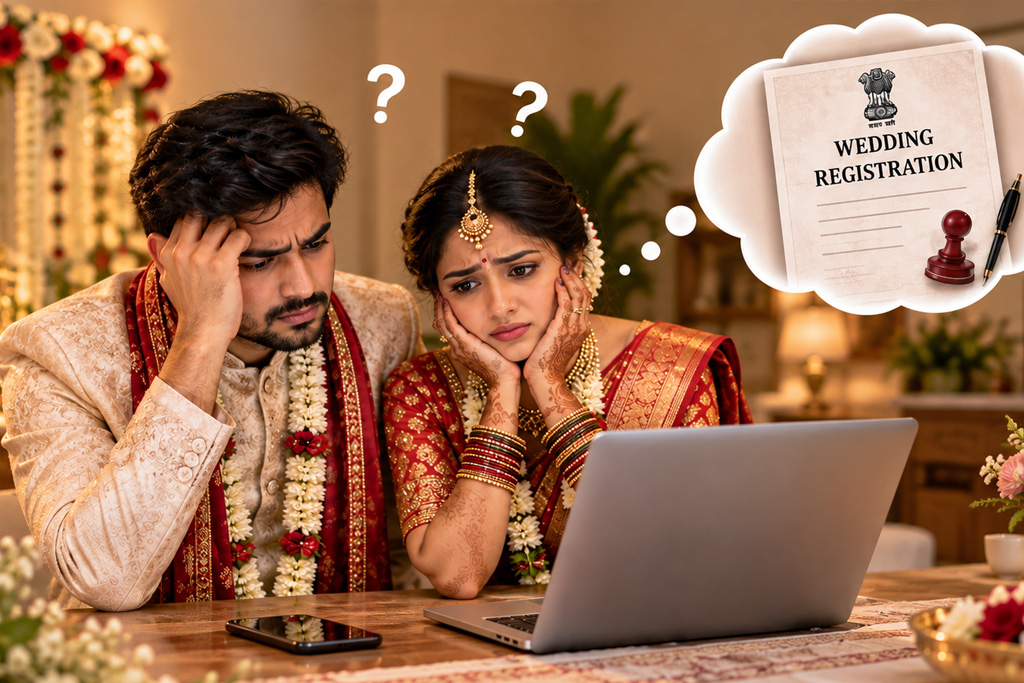
Wedding Registration in India, the Legal Paperwork Couples Often Forget
By Team Wedica | September 16, 2026

A wedding and a legal marriage are not always the same thing in India. It is essential for every couple, even when they complete every traditional wedding ritual, exchange every vow, and celebrate for days, to officially register their marriage under the Hindu Marriage Act, 1955 or the Special Marriage Act, 1954. These two marriage acts are laws that govern marriage registration in the country.
In this blog, we will discuss why it is important to formally register your marriage.
Why Marriage Registration Is Different From the Wedding Itself
A Hindu wedding is legally valid the moment it is solemnized with the required rituals. This means the marriage itself is real and recognized the day it happens.
Marriage registration, however, is a separate legal step that does not happen automatically. It involves applying to a government registrar and receiving an official marriage certificate. Since 2006, the Supreme Court of India has made registration mandatory to protect the rights of couples, particularly women, in matters like property and inheritance. Many couples still treat this step as optional or postpone it, not realizing how much it matters later.
Why the Marriage Certificate Actually Matters
A marriage certificate is not just a formality sitting in a drawer. It is the document that makes everyday and major life decisions possible. Adding a spouse to a bank account, applying for a joint insurance policy, listing a spouse on a passport, or claiming inheritance rights all typically require this certificate as proof.
Without it, couples can face real delays and complications, sometimes at the worst possible time, such as during a medical emergency, a property dispute, or a visa application with a tight deadline. Registration is best thought of as protection for both partners, not paperwork to get around to eventually.
What are the Two Legal Routes for Marriage Registration
Marriages in India are registered under one of two laws, depending on the couple’s background.
➔ The Hindu Marriage Act, 1955
This act applies to Hindus, Buddhists, Jains, and Sikhs. It is built around the idea that the couple has already been married through religious rituals, and registration simply formalizes that marriage on record.
➔ The Special Marriage Act, 1954
It is used for interfaith marriages, civil marriages, or any couple who prefers a purely legal ceremony without religious rituals. This route requires a 30 day public notice period before the marriage can be solemnized and registered, which allows anyone to raise an objection if there is a legal reason the marriage should not take place.
Most traditional Telugu weddings, and Hindu weddings in general, fall under the first Act, while couples from different religions or those choosing a court marriage typically use the second.
What Documents Couples Often Scramble to Find Later
One of the most common reasons couples delay registration is simply not having the right documents ready.
The list of documents usually includes:
● Proof of identity such as Aadhaar or PAN
● Proof of date of birth such as a birth certificate or passport
● Address proof for both parties
● Passport size photographs
Couples also need either the wedding invitation card or an affidavit confirming the date of marriage, along with a certificate from the priest who conducted the ceremony. Many people forget about this last document entirely, especially if some time has passed since the wedding.
Another detail that often catches couples off guard is the witness requirement. Three witnesses who were present at the wedding are required, and each of them needs to bring their own valid identity proof to the registrar’s office. Arranging this weeks or months after the wedding, when guests have scattered back to their own lives, can turn into an unexpectedly difficult task.
What are the Processing Timelines for Marriage Registration
Once the application and documents are submitted, registration under the Hindu Marriage Act is usually completed within about 15 days. Under the Special Marriage Act, the process can take up to 60 days, largely because of the mandatory notice period built into the law.
This timeline matters more than people expect. Couples planning to travel abroad, apply for a spouse visa, or relocate soon after the wedding can find themselves stuck waiting on a certificate they assumed would be ready instantly.
Conclusion
Wedding planning tends to focus entirely on rituals, outfits, and guest lists, while registration quietly gets pushed to the bottom of the list. It deserves a place on the wedding checklist itself, right alongside the ceremony, rather than being treated as something to handle whenever there’s time. A completed marriage certificate is a small piece of paperwork that ends up mattering far more than most couples expect.
FAQ’s
1. What happens if a marriage is not registered?
Without a registered marriage certificate, couples can face difficulties with tasks like applying for a spouse visa, adding a partner to financial accounts, claiming inheritance, or proving the marriage in legal or official situations.
2. Can a marriage be registered in a different state from where it took place?
Generally, registration is done in the state where the marriage was solemnized or where either spouse resides. Rules can vary slightly by state, so it is worth checking the local registrar’s requirements if the couple has since moved elsewhere.
3. Is there a deadline for registering a marriage after the wedding?
There is no strict nationwide deadline, and couples can register a marriage even years after the wedding. That said, some states charge a late fee or ask for additional documents if registration is delayed too long, so registering soon after the wedding is simpler.
4. Do both partners need to be physically present for registration?
Yes, in most cases both partners must appear in person before the registrar, along with their witnesses, to sign the register and complete the process. A few states have introduced partial online steps, but final verification is usually still done in person.
5. Can NRIs or couples living abroad register their marriage in India?
Yes, NRIs can register a marriage in India, typically through the district where the marriage took place or where either spouse’s family resides. Some Indian embassies and consulates abroad also offer marriage registration services under separate rules for overseas marriages.
6. Is a court marriage the same as registration under the Special Marriage Act?
Largely yes. A court marriage refers to a marriage solemnized and registered directly under the Special Marriage Act, without religious rituals, making the registration process itself the wedding ceremony rather than a separate step afterward.
Popular Posts

The One Stop Destination Wedding Venue in Hyderabad
Team Wedica
SEP.23, 2024

The Ultimate Destination for Your Sangeet Ceremony in Hyderabad
Team Wedica
SEP.23, 2024

The Perfect Destination for Your Mehendi Ceremony in Hyderabad
Team Wedica
SEP.23, 2024

The Ultimate Destination for Your Sangeet Ceremony in Hyderabad
Team Wedica
SEP.23, 2024
