Inside a Telugu Wedding: Rituals, Traditions & the Feast That Brings It All Together
By Team Wedica | July 31, 2026
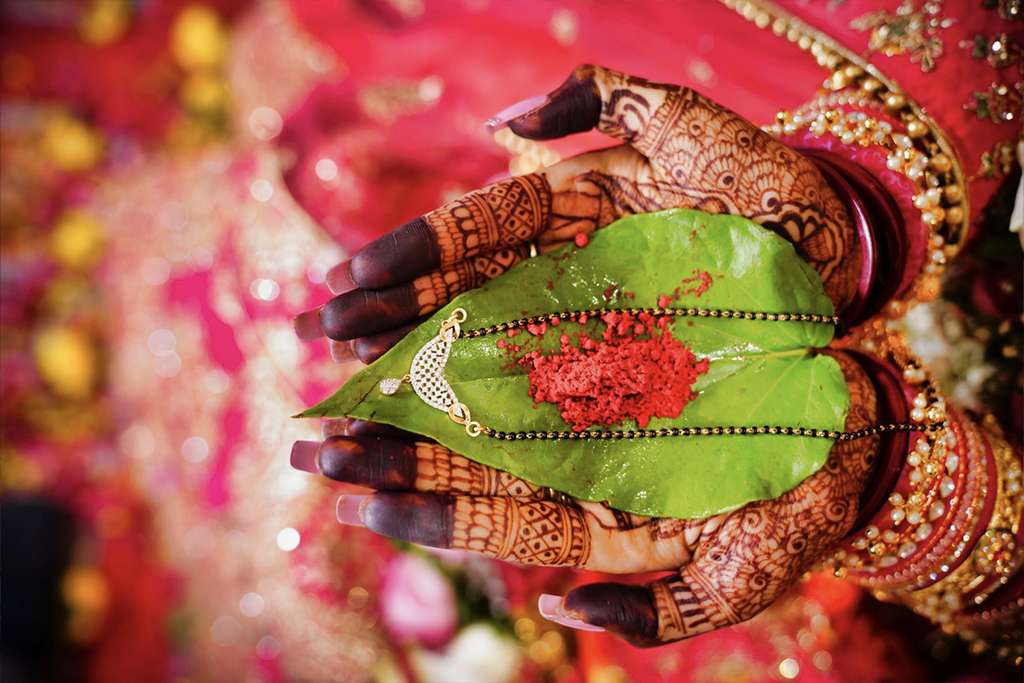
A Telugu wedding isn’t a single event. It’s an arc. Spread across multiple days and layered with many rituals. It moves from one ceremony to the next with a logic that’s been refined across generations. For those attending one for the first time, the sheer density of customs can feel overwhelming. For those who grew up with it, every moment carries a weight that’s hard to put into words.
This guide walks through the full journey of a Telugu wedding. From the first pre-wedding ceremony to the final post-wedding tradition, and the feast that runs through all of it.
Before the Wedding: Pre-Wedding Rituals
The wedding begins well before the ceremony itself. Nischitartham, the formal engagement, is where both families publicly commit to the union. Here gifts are exchanged, the wedding date is fixed, and what was a private understanding becomes a family occasion.
In the days that follow, the bride and groom each experience their own Pellikuthuru and Pellikoduku ceremonies. They have separate rituals conducted by family members that mark the transition into the wedding period. The bride also performs Gauri Puja, a prayer to Goddess Gauri seeking blessings for a happy and prosperous married life.
The groom’s pre-wedding obligations culminate in the Snathakam. It is a ritual in which he symbolically prepares to renounce worldly life and embark on a pilgrimage, dressed in the clothes of an ascetic. It’s a setup for what comes next.
The Wedding Day: Rituals That Define the Ceremony
The wedding day opens with Kashi Yatra, and it’s the moment most guests wait for. The groom, still dressed as a pilgrim from the Snathakam, announces in a playful way that he’s leaving for Kashi rather than getting married. The bride’s brother intercepts him, makes the case for marriage over pilgrimage, and the groom is persuaded to turn back. What could be a solemn ritual is played for warmth and humor, and rarely disappoints on either count.
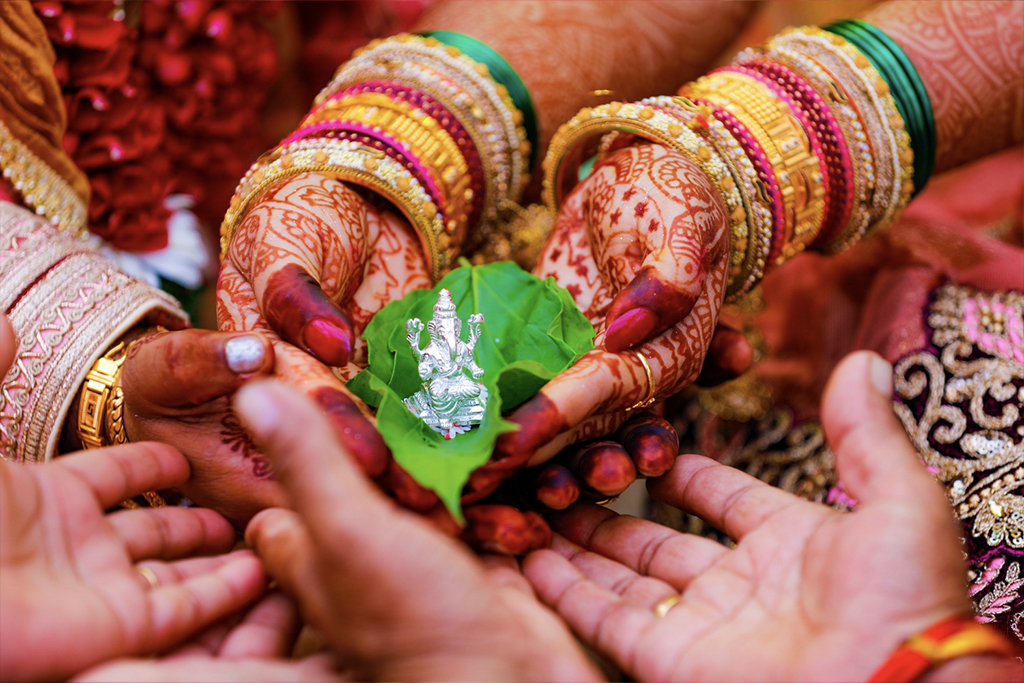
What follows is Jeelakarrabellam — and if Kashi Yatra is the wedding’s most entertaining moment, this is its most tender one. The bride and groom sit facing each other, each holding cumin and jaggery placed in a betel leaf in their palms. They place their hands on each other’s heads simultaneously, an act that marks their first real acknowledgement of each other as partners. The cumin represents life’s inevitable bitterness; the jaggery, its sweetness. Together, the ritual says: we go into this knowing it will be both, and we go in together. It’s a small moment in terms of duration, but few rituals in any wedding tradition carry as much quiet meaning.
The ceremony begins with Vara Puja (Jai Mala). The bride’s family formally welcomes and garlands the groom. Then comes Kanyadanam, the moment the bride’s father places her hands in the groom’s and gives her away. It’s one of the most emotionally loaded rituals of the entire wedding, carrying the full weight of what’s being entrusted and to whom.
Talambralu follows and this is the ritual most distinctly Telugu. The bride and groom shower each other with raw rice mixed with turmeric, often repeatedly, in front of the assembled guests. It’s joyful, slightly chaotic, and visually unlike anything in any other regional wedding tradition. The Saptapadi, seven steps taken together around the sacred fire, brings the ceremony to its formal close, each step representing a shared vow. The couple then performs Arundhati Nakshatra Darshan, looking together at the Arundhati star as a symbol of devotion, fidelity, and the kind of partnership a marriage is meant to be.
The Meaning Behind the Rituals
What’s striking about Telugu wedding rituals, taken together, is their range. The same ceremony that includes the solemnity of Kanyadanam also includes the comedy of Kashi Yatra. The same tradition that anchors itself in sacred fire and astronomical observation also makes room for a turmeric rice fight. That balance between the sacred and the celebratory, the profound and the playful isn’t accidental. It reflects a view of marriage as something that deserves both reverence and joy, and a wedding as the right place to hold both at once.
The Wedding Feast: Food as Ritual
The Telugu wedding feast — pelli bhojanam — is served on banana leaves, and the format is as deliberate as any of the ceremonies that precede it. Guests are seated in rows, and servers move through in sequence, ladling out each preparation in a specific order. Rice, sambar, rasam, a rotating cast of vegetable dishes, pickles, and papad, closing with payasam.
The food served can vary by location within the Telugu-speaking regions. In the northern part, Telangana, the main course predominantly features meat dishes. In contrast, the southern region, Andhra Pradesh, primarily offers vegetarian options.
The dishes themselves carry regional identity. Bobbatlu (sweet lentil-stuffed flatbread), Pulihora (tamarind rice), and Paramannam (sweet rice pudding) are near-universal on Telugu wedding menus. Pesarattu appears at morning functions. Gongura — the sour leafy green that’s essentially Telugu cuisine’s signature ingredient — shows up in multiple preparations. Non-vegetarian weddings center on grav curries and biryani, and other varities of different meats.
The feast isn’t an after thought to the ceremony. It’s an extension of the same hospitality that the entire wedding is built on — the idea that how you feed your guests says as much about a family as how they conduct their rituals.
After the Wedding: Post-Wedding Traditions
The ceremonies don’t end with the reception. Gruhapravesam — the bride’s formal entry into her new home — is its own ritual occasion, marked by specific customs that welcome her into the family’s domestic space. The days that follow include smaller ceremonies that gradually shift the register from “wedding” to “marriage.” Together, they mark the transition not as a single moment but as a process — one that takes time, and is given time.
FAQ’s
1. How many days does a Telugu wedding typically last?
Most Telugu weddings run across two to three days, with pre-wedding rituals beginning a day or two before the main ceremony and post-wedding traditions extending into the days that follow.
2. What is the most important ritual in a Telugu wedding?
Saptapadi — the seven steps around the sacred fire — is considered the most binding and significant. Kanyadanam, the giving away of the bride by her father, carries the most emotional weight for most families.
3. What makes Talambralu unique to Telugu weddings?
It’s a distinctly Telugu custom with no direct equivalent in other South Indian wedding traditions. The image of the bride and groom showering each other with turmeric-mixed rice is one of the most recognizable visual signatures of a Telugu wedding.
4. What is traditionally served at a Telugu wedding feast?
Bhojanam on banana leaves, featuring Bobbatlu, Pulihora, Paramannam, sambar, rasam, vegetable preparations, Gongura dishes, pickles, and payasam. Non-vegetarian weddings typically center the meal around biryani.
5. How does a Telugu wedding differ from other South Indian weddings?
Rituals like Kashi Yatra, Talambralu, and Snathakam are specific to Telugu tradition. The tone — balancing deep solemnity with genuine humor and celebration — is also characteristic, as is the centrality of the banana leaf feast as a hospitality ritual in its own right.
Popular Posts

The One Stop Destination Wedding Venue in Hyderabad
Team Wedica
SEP.23, 2024

The Ultimate Destination for Your Sangeet Ceremony in Hyderabad
Team Wedica
SEP.23, 2024

The Perfect Destination for Your Mehendi Ceremony in Hyderabad
Team Wedica
SEP.23, 2024

The Ultimate Destination for Your Sangeet Ceremony in Hyderabad
Team Wedica
SEP.23, 2024
