Blogs Details

Saptapadi: The Meaning Behind the Seven Steps of a Hindu Wedding
By Team Wedica | July 13, 2026
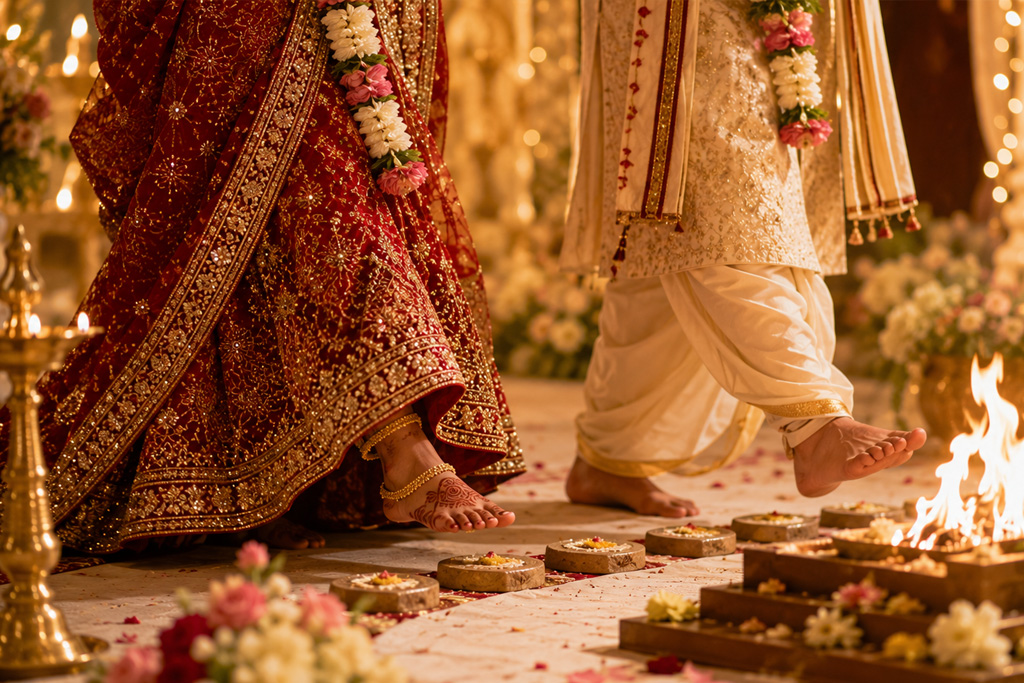
A Hindu wedding includes several rituals, but Saptapadi is one of the most meaningful among them. The word Saptapadi comes from Sanskrit. Sapta means seven, while padi refers to steps. During this ritual, the bride and groom take seven steps together in the presence of the sacred fire. Each step represents a promise they make to one another as they begin married life.
The exact words, order and method of performing Saptapadi may vary across regions, communities and family traditions. Still, the central idea remains the same. The marriage is a shared journey built on responsibility, respect, support and companionship.
What Is Saptapadi?
Saptapadi is usually performed near the sacred fire during a Hindu wedding ceremony. The fire, or Agni, is considered a witness to the marriage. As the couple takes each step, prayers or vows are recited. These promises relate to different parts of married life, including food, strength, prosperity, family, health and friendship.
In some traditions, the couple takes seven individual steps. In others, the ritual may be connected with the seven rounds taken around the sacred fire. Because customs differ, Saptapadi may not look exactly the same at every Hindu wedding.
The Meaning of the Seven Steps in Hindu Weddings
1. The First Step: Nourishment and Shared Responsibilities
The first step is commonly associated with food, nourishment and the basic needs of the household. The couple promises to support one another and work together to build a stable home. In modern terms, this can also mean sharing household responsibilities and making important decisions together.
2. The Second Step: Strength and Support
The second step represents strength. The bride and groom promise to give one another emotional, physical and spiritual support. Married life can bring both joyful and difficult moments, and this step reflects the promise to face them together.
3. The Third Step: Prosperity and Stability
The third step is connected with prosperity and financial wellbeing. The couple prays for a comfortable and secure life. It also represents the responsibility of earning honestly, managing money carefully and planning for the future together. For modern couples, this can include discussing savings, expenses, careers and long-term financial goals.
4. The Fourth Step: Love and Happiness
The fourth step focuses on love, respect and happiness within the marriage. The couple promises to treat each other with affection and care. It also reminds them that a peaceful home depends on communication, patience and mutual respect. Love in marriage is not limited to the wedding day. It must continue through everyday actions and decisions.
5. The Fifth Step: Family and the Future
The fifth step is traditionally linked with family, children and future generations. The couple prays for the wellbeing of their family and promises to fulfil their responsibilities together. Today, this step can also be understood more broadly as making shared decisions about family life and supporting the people they care about.
6. The Sixth Step: Health and Long Life
The sixth step represents health, peace and a long life together. The couple promises to care for one another through different stages of life. This includes supporting each other during illness, encouraging healthy choices and remaining present during difficult times.
7. The Seventh Step: Friendship and Lifelong Companionship
The seventh step is often seen as the most important. The couple promises friendship, loyalty and lifelong companionship. It reflects the idea that a strong marriage is not built only on love, but also on trust, understanding and friendship. By taking the final step, the bride and groom accept one another as partners in life.
Is Saptapadi the Same as Saat Phere?
Saptapadi and Saat Phere are often spoken about as though they are the same ritual, but there can be a difference. Saptapadi specifically refers to the seven steps taken by the couple. Saat Phere generally refers to seven rounds around the sacred fire.
In some wedding traditions, the steps and rounds are part of the same ceremony. In others, they may be performed differently. The number of rounds, who leads and the vows recited may also change depending on regional and family customs.
The Legal Significance of Saptapadi
Saptapadi also has legal significance under the Hindu Marriage Act, 1955. Section 7 of the Act states that a Hindu marriage may be solemnised according to the customary rites and ceremonies followed by either party. When those customs include Saptapadi, the bride and groom jointly taking seven steps before the sacred fire, the marriage becomes complete and binding when the seventh step is taken.
This gives the ritual both symbolic and legal importance. The seventh step does not only represent lifelong companionship; within traditions that practise Saptapadi, it also marks the completion of the marriage ceremony.
Why Saptapadi Still Matters Today
Although Saptapadi is an ancient ritual, its promises remain meaningful for modern couples. The seven steps speak about sharing responsibilities, managing finances, caring for family, supporting each other’s health and building a relationship based on friendship. These are not only traditional ideas. They are also practical foundations for a healthy marriage.
Modern couples may interpret the vows in ways that reflect their own relationship. For example, prosperity may mean supporting each other’s careers, while strength may mean offering emotional support during stressful periods. The ritual can therefore connect tradition with the realities of married life today.
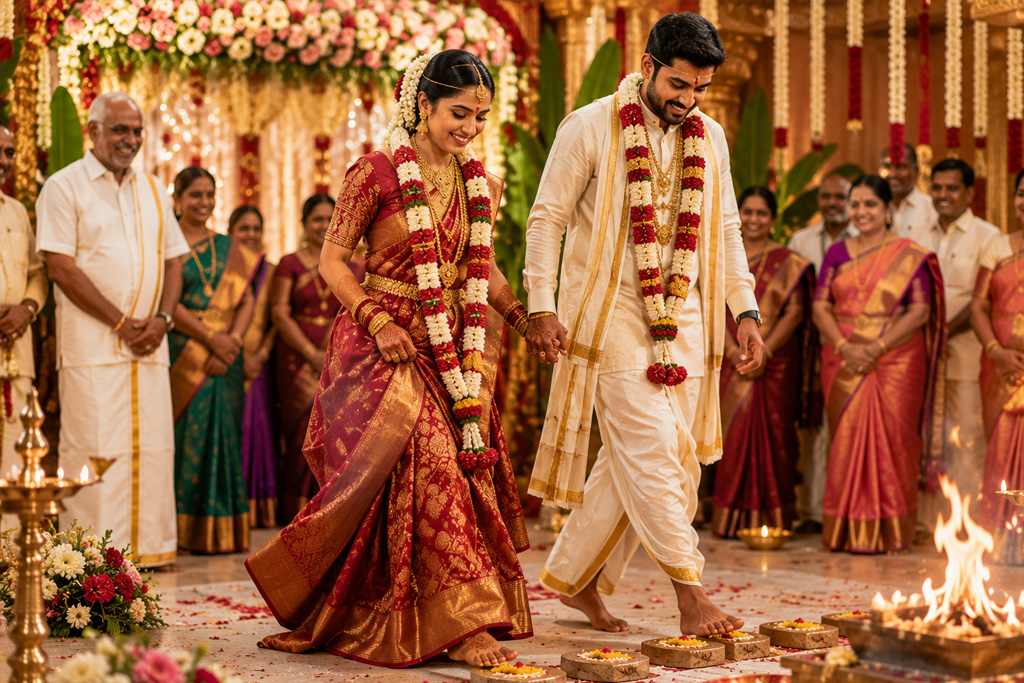
More Than a Wedding Ceremony
Saptapadi is not simply a ceremonial walk around a fire. It represents the beginning of a shared life. Each step moves from basic responsibilities, such as food and financial stability, towards deeper promises of love, health, loyalty and friendship.
The ritual reminds couples that marriage is built gradually. It requires two people to move forward together, support one another and remain committed through every stage of life. At its heart, Saptapadi is a promise to walk through life as partners, one step at a time.
FAQ’s
1. What does Saptapadi mean?
Saptapadi is a Sanskrit term in which sapta means seven and padi refers to steps. It is a Hindu wedding ritual in which the couple takes seven steps together, with each step representing a promise for married life.
2. Is Saptapadi the same as Saat Phere?
Not exactly. Saptapadi refers specifically to the seven steps taken by the couple, while Saat Phere generally refers to seven rounds around the sacred fire. The way these rituals are performed can vary across communities and regions.
3. What do the seven steps in Saptapadi represent?
The seven steps commonly represent nourishment, strength, prosperity, love, family, health and lifelong friendship. The exact wording and interpretation may differ depending on the couple’s customs and wedding tradition.
4. Is Saptapadi compulsory in every Hindu wedding?
No. The Hindu Marriage Act recognises the customary rites and ceremonies followed by either party. Saptapadi is legally significant when it forms part of those customary wedding rituals, but it is not compulsory for every Hindu community.
5. When does a Hindu marriage become complete during Saptapadi?
Under Section 7 of the Hindu Marriage Act, when Saptapadi is part of the couple’s customary ceremony, the marriage becomes complete and binding when the bride and groom take the seventh step together.
Popular Posts

The One Stop Destination Wedding Venue in Hyderabad
Team Wedica
SEP.23, 2024

The Ultimate Destination for Your Sangeet Ceremony in Hyderabad
Team Wedica
SEP.23, 2024

The Perfect Destination for Your Mehendi Ceremony in Hyderabad
Team Wedica
SEP.23, 2024

The Ultimate Destination for Your Sangeet Ceremony in Hyderabad
Team Wedica
SEP.23, 2024
