Groom Haldi Ceremony: Rituals, Ideas & Traditional Telugu Customs
By Team Wedica | September 22, 2026
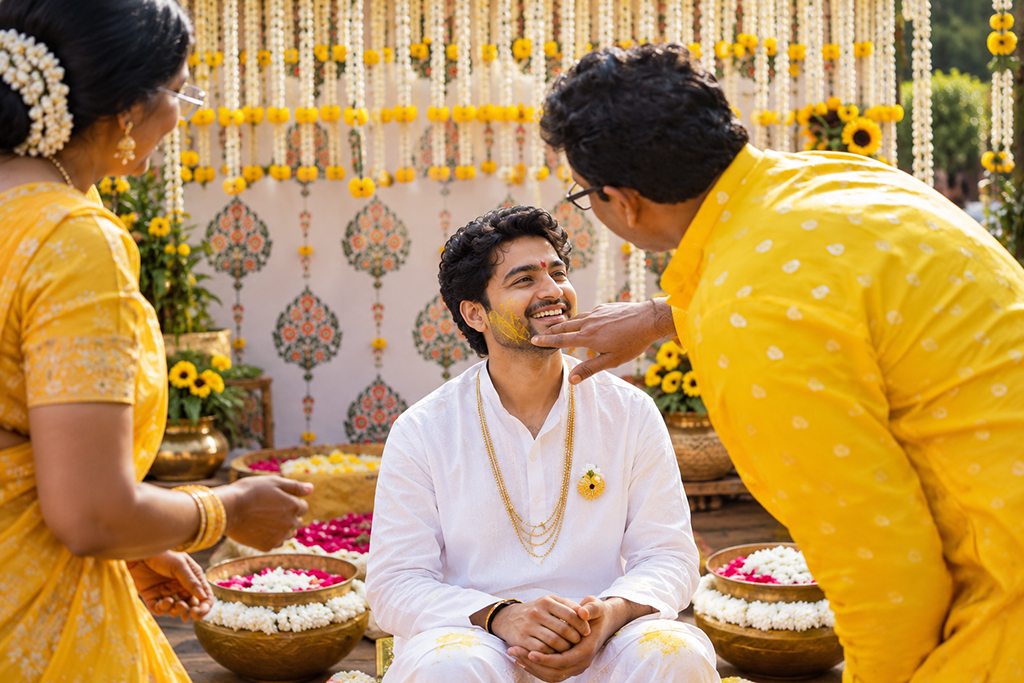
In a traditional Telugu wedding, the bride often commands the spotlight during initial pre-wedding planning, but the groom’s rituals carry equal spiritual depth, warmth, and high-energy celebration. Known natively as the Pellikoduku function (or Nalugu), the Telugu groom Haldi ceremony marks the official transition of a young man into a groom.
While modern weddings have blended the North Indian concept of a high-spirited Haldi party into the schedule, the core of a Telugu groom’s Haldi remains rooted in sacred Vedic traditions, family blessings, and vibrant customs.
Nalugu vs Modern Haldi: What Is the Difference?
● Nalugu (The Sacred Anointing): This is the core religious ritual. Nalugu refers to a paste made of flours (typically besan or rice flour), turmeric, oils, and aromatic spices. Married women (Sumangalis) and close family apply this paste to the groom’s face, hands, and feet using tamalapaku (betel leaves) or uthareeni (sacred grass/twigs) while chanting traditional songs (Nalugu Paatalu).
● The Modern Haldi Party: This is the post-ritual celebration where friends and extended family join in with yellow color play, floral showers, music, and swimming pool splashes.
Together, these two phases balance spiritual reverence with joyous family bonding.
What Are the Traditional Telugu Groom Haldi Rituals?
1. Ganesh Puja & Kalyana Appalu:
The day begins early with a private family puja. The family worships Lord Ganesha to remove all obstacles. Special traditional sweets like Kalyana Appalu (jaggery and rice flour deep-fried sweet crisps) are prepared and offered as prasad.
2. The Nalugu Application:
The groom sits on a decorated low wooden stool (Peta). Married female relatives, starting with the mother and aunts, apply a mixture of fragrant oils and turmeric-flour paste to his shoulders, arms, legs, and face. The maternal uncle (Menamama) plays a pivotal role during this ceremony, presenting gifts and leading key family steps.
3. Harathi & Warding Off Drishti:
Once the paste is applied, elders perform a traditional Harathi using a brass lamp with camphor and kumkum water to ward off negative energy (Drishti) from the groom before his wedding day.
4. Mangala Snanam:
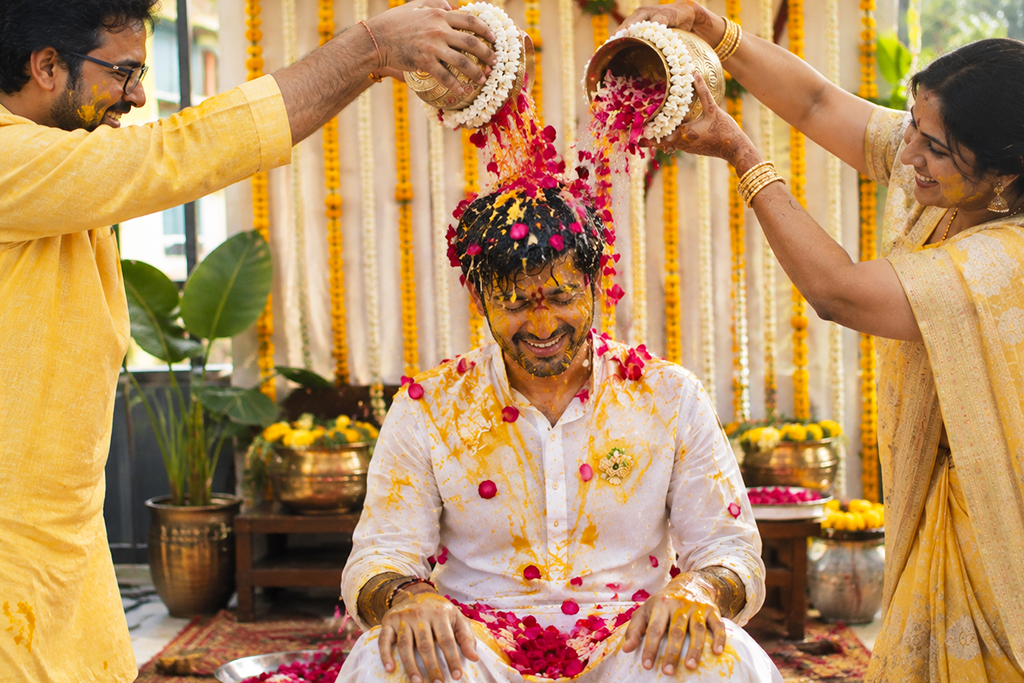
The groom is escorted outdoors or to a designated bathing area for the sacred bath (Mangala Snanam). Family members pour holy water from decorated brass pots (Garvinti) over the groom to wash away the turmeric, symbolizing physical and spiritual purification.
What Should the Groom Wear for the Haldi Ceremony?
Finding the right outfit requires balancing tradition for the puja with comfort for the messy celebrations afterward.
| Event Phase | Recommended Outfit | Vibe & Practicality |
|---|---|---|
| Nalugu & Puja | Ivory or silk dhoti with a matching kanduva | Classic and traditional, ideal for formal photographs |
| Mangala Snanam | Simple white cotton kurta or kurta-pajama | Lightweight, comfortable, easy to wash, and traditional |
| Floral Holi / Haldi Party | Bright yellow short kurta with casual trousers | Festive, comfortable, and practical for a colourful celebration |
What Are the Best Decor Ideas for a Telugu Groom Haldi?
Eco-Friendly Telugu Backdrop Setup
Move away from generic synthetic backdrops by embracing traditional Telugu aesthetics:
- Coconut Leaf Weaving (Tati Aku): Use woven coconut palm leaves as a natural green backdrop.
- Marigold & Lotus Strings: Layer vibrant yellow and orange Gendaphool with fresh lotus blooms.
- Brass Elements: Arrange large brass Urli bowls filled with floating flower petals, along with traditional Kuthu Vilakku (standing brass oil lamps).
Interactive Celebration Elements
- Flower Petal Shower: Substitute harsh chemical colors with basketfuls of fresh marigold and rose petals for cinematic photo opportunities.
- Live Teenmaar Dhol: Hire a traditional local brass band or Teenmaar dhol players to maintain high energy following the ceremonial bath.
Final thoughts
The groom’s Haldi is about a grounded transition, a rare pause where tradition shifts the spotlight onto the man preparing for one of life’s biggest commitments. Long after the turmeric washes off and the Teenmaar beats fade, what remains is the strength of the blessings gathered in that single morning.
By honoring the sanctity of the Nalugu while embracing the spontaneous joy of the celebration, you set a soulful, high-vibe tone for everything that follows on the wedding canopy.
FAQ’s
1. What is the Telugu groom Haldi ceremony called?
The traditional Telugu groom Haldi ceremony is commonly known as Nalugu or Pellikoduku function. It involves applying a turmeric-based paste to the groom as part of the pre-wedding rituals.
2. What happens during the groom's Nalugu ceremony?
During Nalugu, the groom sits on a decorated stool while married women and close family members apply turmeric and other traditional ingredients to him. The ritual is followed by blessings, Harathi, and Mangala Snanam, depending on the family’s customs.
3. What does the groom wear for Nalugu?
The groom traditionally wears an ivory or silk dhoti with a kanduva for the Nalugu and puja. For the post-ritual celebrations, he can change into a comfortable kurta and trousers.
4. Who applies Nalugu to the groom?
Traditionally, married women from the family, including the groom’s mother, aunts, and other close relatives, take part in applying the Nalugu paste. Specific customs can vary between families and regions.
5. What is Mangala Snanam in a Telugu wedding?
Mangala Snanam is the auspicious ceremonial bath performed before the wedding. The ritual symbolises purification and marks an important step in the groom’s preparation for the wedding.
Popular Posts

The One Stop Destination Wedding Venue in Hyderabad
Team Wedica
SEP.23, 2024

The Ultimate Destination for Your Sangeet Ceremony in Hyderabad
Team Wedica
SEP.23, 2024

The Perfect Destination for Your Mehendi Ceremony in Hyderabad
Team Wedica
SEP.23, 2024

The Ultimate Destination for Your Sangeet Ceremony in Hyderabad
Team Wedica
SEP.23, 2024
